In Africa, women struggle to cope with endometriosis through a combination of medical management, behavioral adjustments, and community-driven support. Given the systemic barriers like high costs and limited specialists, many rely on grassroots networks and self-care strategies.
Endometriosis is a chronic disease where tissue similar to the lining of the uterus (endometrium) grows outside the uterus, causing chronic pain, inflammation, scar tissue and in many cases, infertility. Yet despite affecting an estimated 1 in 10 women globally, it remains widely misunderstood and underdiagnosed particularly across the African continent.
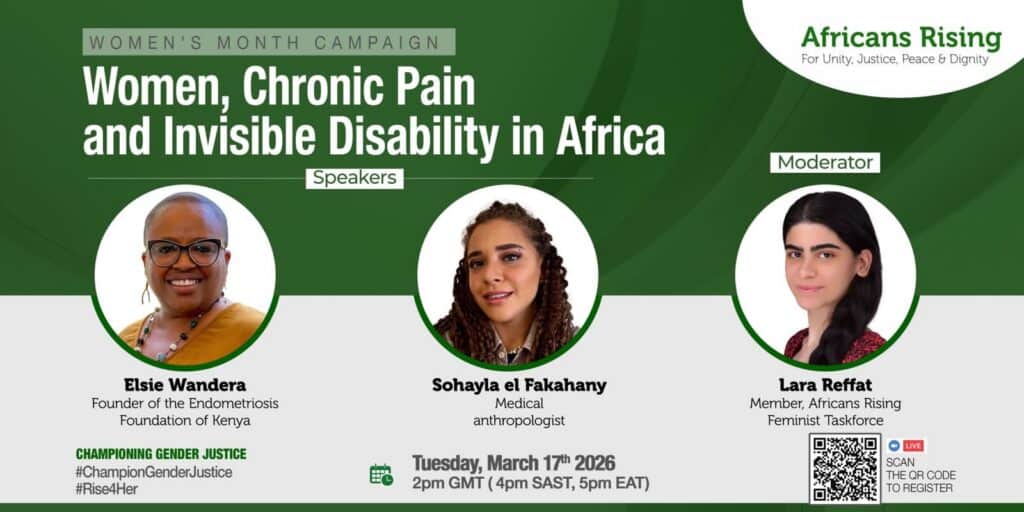
This Women’s Month, Africans Rising is shining a light on the often-overlooked reality of women living with chronic pain and invisible disabilities across Africa. In a recent webinar hosted by the Africans Rising Feminist Taskforce titled “Women, Chronic Pain and Invisible Disability in Africa,” held in recognition of Endometriosis Awareness Month and as part of the Africans Rising Women’s Month Campaign, experts and activists came together to highlight the unique and often steep challenges African women face while living with these “invisible disabilities.”
Speakers explored the medical, cultural, and socio-economic dimensions of endometriosis, drawing attention to several key challenges:
- Diagnostic Delays: On average, women suffer for years, sometimes over a decade without a name for their pain. Kenyan activist, Elsie Wandera shared her own 13-year struggle before receiving a diagnosis.
- Medical Scarcity: Access to knowledgeable healthcare providers remains a major barrier. Specialist, Dr. Christo Benecke noted that finding a doctor who truly understands endometriosis and can provide accurate diagnosis rather than just jumping to surgery is a major barrier.
- Cultural & Socio-Economic Barriers: Medical anthropologist, Sohayla el Fakahany highlighted how factors such as age, class, and geography shape access to care. She pointed out that in Egypt quality treatment is prohibitively expensive, making it inaccessible to the majority of women.
- The Weight of Infertility: Beyond physical pain, endometriosis can lead to infertility which is often accompanied by stigma, social pressure, and isolation in communities where womanhood is closely tied to motherhood.
Despite these challenges, the webinar also underscored the power of collective action. Grassroots support systems, advocacy efforts, and safe spaces for sharing experiences are proving to be lifelines for many.
“We help connect patients with specialists via WhatsApp and community outreach, creating spaces where women can share their experiences and find support.”
Elsie Wandera,
Founder of the Endometriosis Foundation in Kenya
True gender justice means ensuring that no woman is forced to suffer in the shadows. By spreading awareness, we can turn invisible pain into visible action and create a more inclusive society, where women can access the care and support they need to thrive.