
By Itati G. Dzekedzeke
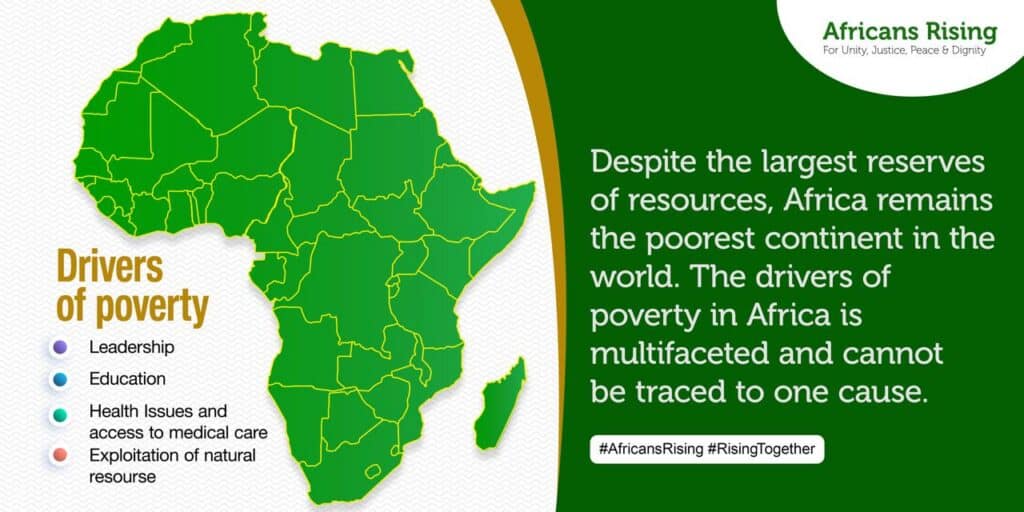
The paradoxical economic situation of Africa is one of a continent endowed with immense natural wealth but saddled with poverty, hunger, instability, and gross underdevelopment.”In his 1993 book Sustaining Development in Mineral Economies: The Resource Curse Thesis, economist Richard M. Auty described this as the ‘Paradox of Plenty’. Despite political independence from colonial powers many decades ago, Africa remains inundated with economic injustices and inequalities that continue to impede its development.
The tale of a continent on the cusp but not quite there economically should be nearing its conclusion. By way of introduction, this article surmises that the factors causing economic injustice and inequality are vast and can range from inept political leadership, corruption, the enduring legacy of colonialism, Neo-colonial influences, to poor institutional administration. The purpose and focus of this piece, however, is not to dwell on the causes as they are wide and intricate, but to outline some grassroots initiatives that could mitigate economic injustice at a microeconomics level and seek to achieve more egalitarian outcomes.
Economic justice concerns the principles appropriate for assessing society’s distribution of social benefits and burdens, particularly wealth, income, status, and power. It involves creating equal economic value, opportunity, and rights for all, alongside the prohibition of discrimination between men and women in economic matters. At its core, it is a society organised along socialist principles, concerned with giving all members a fair share of available benefits and resources.
Conversely, capitalism, as practiced across much of Africa, has often been associated with inequality. It has often resulted in the systematic denial of fair economic opportunities and resources to specific groups. More than half of African countries carry a Gini index above 40, indicating high levels of wealth inequality. The evidence suggests that the sources of this inequality are fundamentally structural: capital moves around the world seamlessly through multinationals, while the workers and the communities in which that value is generated remain stuck in place, largely unable to participate in the wealth they help create.
To achieve true and sustainable economic justice, carefully designed structural policies at a macroeconomic level are necessary. These policies should seek to shift, reframe, and prioritise equity, social inclusion, and environmental sustainability. Trade reform, progressive taxation, debt relief, and the regulation of multinational corporations must all feature in any serious reform agenda. However, it would be naive to wait for the slow machinery of state policy before addressing the immediate realities faced by ordinary communities. That is where grassroots action becomes not just relevant, but essential.
At the community level, there are several practical and proven approaches through which ordinary people can begin to reclaim economic agency in the face of systemic inequality. These include:
Savings and Credit Cooperatives (SACCOs) and informal savings groups have become a staple across Africa. These savings cooperatives and informal savings circles have long served as community-driven financial instruments. These structures allow members to pool resources, access credit, and invest collectively in small enterprises. Where formal banking institutions fail or are inaccessible, these grassroots mechanisms provide both liquidity and a social safety net. Strengthening and formalising these structures can extend their reach and impact significantly. SACCOs and savings groups have their detractors who argue that these programmes are far more effective when paired with financial literacy training..
Community agriculture and food sovereignty movements engage rural farmers through community-led agricultural cooperatives to achieve a form of autonomy. These initiatives address economic injustice at its most immediate level: food security. By organising collective ownership of land and farming tools, communities can resist the monopolisation of arable land by large agribusinesses and reduce dependency on imported food. These programs can achieve this by promoting organic and regenerative agriculture to increase food independence and even grow into viable livelihoods, particularly for women and youth who form the backbone of smallholder farming.
Youth-led entrepreneurship programs seek to empower youths with digital access and literacy. Community innovation hubs, skills training centres, and mentorship networks have emerged across the continent. These spaces democratise access to digital skills, bridging the gap between a youth population that is mobile-first and an economy that still underutilises their talent. Expanding mobile money systems and affordable internet access has opened economic participation to those previously excluded and created space for innovation.
Women’s skills training groups focus on combining vocational skills with business management, financial literacy, and savings initiatives to break poverty cycles. These programs can specialize in handicrafts and other trades tailored to local market demands. By pairing technical training in handicrafts or local trades with entrepreneurial education, these programs empower women to achieve financial independence and resilience.
The economic injustices facing Africa are deep-rooted and will not be undone through a single policy shift. The structural causes are real and demand sustained political will at the highest levels. But waiting for structural change to trickle down to communities that are struggling today is not a viable option. Grassroots initiatives represent a parallel and complementary path toward economic justice. They do not replace the need for systemic reform; rather, they demonstrate what is possible when communities refuse to be passive in the face of their circumstances. Africa’s greatest untapped resource is not beneath its soil; it is in its people.
Africans Rising, in its role as a movement of movements, is seeking to widen its network of individuals and organizations concerned with and working towards economic justice. Join the movement today to participate in training, knowledge-sharing sessions, and exchange programs.
Become a member here: https://www.africansrising.org/member/