
African Women and the Unfinished Journey to Reparatory Justice
A reflection of the Next Steps High-Level Conference on United Nations General Assembly Resolution A/RES/80/250 held in Accra Ghana from June 17 – 19 2026
By Eunice Adhiambo Odhiambo; Reparations Officer, Africans Rising
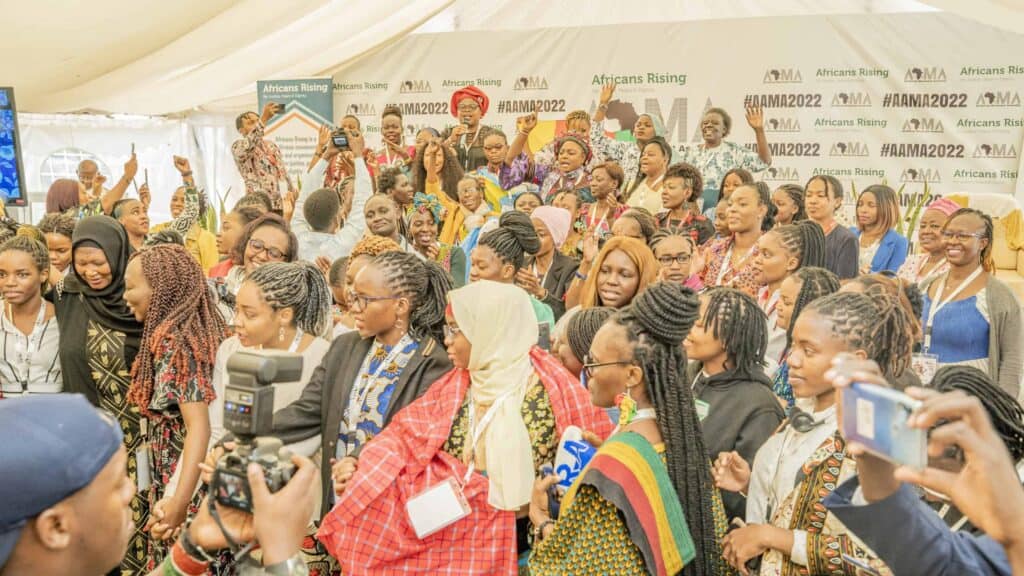
The passing of the United Nations General Assembly Resolution A/RES/80/250 recognising the enslavement of Africans and racialised chattel enslavement as the most heinous crimes against humanity, is a momentous step in the fight for reparatory justice across the globe. It recognises the truth that African and Afro-descendants have known all along: that the enslavement of millions of Africans was more than an episode in history; it was a crime whose impact persists until today.
At the High-Level Consultative Conference on the Way Forward Following the Historic Resolution, held in Accra, Ghana however, there was one message that was delivered with great poignancy. The President of Ghana, John Dramani Mahama, asked the audience to recognise that the suffering inflicted by slavery was not uniform. He urged the reparations campaign to take into consideration the special suffering faced by African women.
His call could not have come at a more appropriate time.
For too long, the issue of slavery has been discussed in terms of forced labour, economic exploitation and plantation cruelty, yet without recognising the gender-specific violence that was perpetrated against millions of African women and girls. For reparatory justice to be effective, it should start with acknowledging the whole truth.
For thousands of African women, the torture started well before they made it to the shores of the Atlantic. Slavery raiding expeditions would destroy lives, tear apart communities and leave them with nothing. They would see their husbands, their fathers, brothers, and sons slaughtered as they defended their community. Many were widowed instantly. Those who survived the invasions lost their children in the mayhem or were forced to leave behind babies and the aged family members when trying to escape from the attackers.
Those who were captured had to endure another brutal process; trekking to the shores for hundreds of kilometres under extremely harsh circumstances. It took weeks or months to complete that journey. Women, including lactating mothers would carry their babies while enduring thirst, starvation, and exhaustion. Some gave birth in the process, some miscarried due to starvation and beatings, and some watched their children die on the way either due to starvation, illness or physical brutality.
In the slave castles along the coast, the torture intensified. The women were incarcerated in crowded dungeons filled with disease, malnutrition, and hopelessness. Young women and girls were routinely selected by their enslavers for sexual abuse before being thrown back into the dungeon. Right above the same dungeon where the abuses took place, church ceremonies were conducted; thereby presenting one of the largest moral inconsistencies in the history of mankind.
The Middle Passage was no less horrific either. Women suffered disease, overpopulation, and constant torture on the slave ships while still remaining sexually vulnerable. Women landed in the Americas wounded physically and psychologically forever.
African women on plantations became tools of profitability. They laboured all day long in the farms, mining areas, and households while also preparing meals, taking care of children, and maintaining their communities. However, their labour was not everything they were made to do. Their reproductive abilities became yet another means through which they generated wealth. Slave owners forced their slaves to get pregnant since every offspring born as a slave added to their labour pool and capital. The bodies of black women thus became factories for the production of more slaves.
Many of them were also made to act as wet nurses, being forced to breastfeed the children of slave owners while their own children were starving to death or simply neglected. Few cases could better illustrate how the institution of slavery dehumanised African women by denying them their basic maternal rights.
Rape was used as another weapon to uphold the racial hierarchy in colonial societies. The rapes of slave women and defilement of girls by slave masters and overseers happened regularly. The offspring born from these actions rarely benefited either from freedom or security. Lighter-skinned girls were taken away from their mothers and sold as domestic servants or concubines. Families were routinely disrupted through sales and displacement. Mothers would watch their children sold to other plantations, usually not to return again. Family disruption became one of the lasting impacts of slavery.
African women were not only victims of oppression.
Despite the odds being stacked against them, they became the custodians of African survival. They safeguarded languages, songs, spirituality, farming, medicine and memories across the Americas, Asia and the Caribbean. Using stories, food, healing practices, religion and daily defiance, they transported Africa into the new worlds. They became teachers without classrooms, historians without books and healers unacknowledged. Their strength made sure that African identity could survive systematic oppression for many years to come.
In President Mahama’s words, the world learnt that reparations must be engendered. Reparations must go beyond monetary compensation and ceremonial public apologies and recognise the harm done to African women through sexual violence, forced reproduction, forced labour, family dislocations, wet nursing and deliberate erasure of motherhood. To understand the inequalities that still exist today against women of African descent like gender violence, poverty, lack of access to land and education, maternity health issues and systemic racism, one needs to examine the initial mechanisms through which African women were commodified and enslaved.
It is thus important for reparatory justice to restore not only wealth but also history and dignity. Such a task entails documenting experiences of these women, conducting gender studies about slavery, reforming educational curriculum, creating sites of memory, building monuments dedicated to African women and girls like their male counterparts, empowering women, and recognising their important contributions to liberation movements and nation-building.
United Nations resolution has marked the beginning of a new era in the fight for justice across the globe, but recognition alone is just the beginning of the battle. As President John Dramani Mahama said, “Recognizing the crime of slavery is recognizing the fact that this burden has not been equally shared.”
History and suffering of African women cannot continue to a footnote in the reparations movement, and the crimes committed against them; loss of family and community structure; sexual abuse, rape and forced breeding; wet-nursing and commodification of their bodies are essential parts of the whole story of slavery. And only in this way can we honour those who have experienced the horrors of enslavement, restore their dignity, and ensure reparatory justice!