
By: Abla Salih Boush
There is a particular kind of grief that comes with leaving your homeland. But there is another grief, less spoken of, the one that arrives when you realize you no longer have a homeland to return to, and yet you must find a way to belong somewhere else. For thousands of Sudanese who fled the war that erupted in April 2023, this grief has become a daily companion. We crossed borders into Uganda, Kenya, Egypt, Chad, and beyond. We paid bribes at checkpoints, slept in temporary camps, and navigated bureaucracies designed to exclude us. And yet, in the midst of all this, something unexpected happened: we began to feel at home in countries that were never meant to be ours.
This is not a story about policy. It is a story about people, about the messy, human work of belonging across borders drawn by strangers over a century ago.
The Borders We Did Not Draw
To understand why Sudanese migration feels the way it does, you must first understand the borders themselves. The Berlin Conference of 1884–1885 carved Africa into territories that served European interests, not African realities. Ethnic groups were split, trade routes were severed, and communities that had shared language, kinship, and commerce for centuries found themselves on opposite sides of arbitrary lines. The border between Sudan and Uganda, for instance, was never a natural one. It was a colonial convenience.
When Uganda celebrates its independence from British rule on October 9, 1962, and when Sudan gained its independence from the same British colonial power on January 1, 1956, both are celebrating a liberation the other knows well. We share the same colonial wound. We share the same struggle for self-determination. And yet, the passport I carry, if I am lucky enough to carry one, marks me as a foreigner in a land that feels like my second home.
This is the paradox of postcolonial Africa: we are united by a shared history of oppression yet divided by the very borders the oppression created. The colonial powers in Berlin in 1884 carved Africa into colonies, defining its peoples by European languages and borders. We are forced to avoid and navigate this hostile bureaucracy because the colonial power that drew these lines never intended for us to belong.
This is the paradox of postcolonial Africa: we are united by a shared history of oppression, yet divided by the very borders that oppression created. The colonial powers in Berlin in 1884 carved Africa into colonies, defining its peoples by European languages and borders. We are forced to avoid and navigate this hostile bureaucracy because the colonial power that drew these lines never intended for us to belong.
The Bureaucracy of Exclusion
I live in Kenya, and my sisters are in Kampala after the war. From time to time, I travel to Kampala, spend two weeks with them, and then return. Every border crossing puts me face to face with this division and reconstruction. But the last trip was different.
On my way back from Kampala to Kenya, after visiting my sisters, at the border between Uganda and Kenya, I was stopped. Officials demanded visa fees despite a Kenyan court ruling that explicitly allows Sudanese to enter without a visa. I explained that I had no money. I explained that Sudan is at war, and that I cannot go back. Their response was simple: “Then go back to your country.”
I told them: “Do you know there is a war in my country? I cannot go back.”
They told me: Pay or leave.
So I paid.
This is not an isolated incident. It is a pattern. Sudanese in East Africa have reported similar experiences: extortion at border crossings, arbitrary detention, demands for bribes. The law may say one thing, but the reality on the ground says another. The gap between policy and implementation is where our dignity is lost.
And it is not just about visas. It is about the relentless humiliation. It is about the fear that accompanies every interaction with authority. It is about the exhaustion of constantly proving you deserve to exist.
Feeling at Home in Unexpected Places
And yet, something remarkable happens when Sudanese arrive in Kampala or Nairobi. We find each other. We build community. We open restaurants serving kisra and asida. We create WhatsApp groups where we exchange information about jobs, housing, and safe routes. We celebrate Eid together, grieve together, and slowly, tentatively, learn to belong.
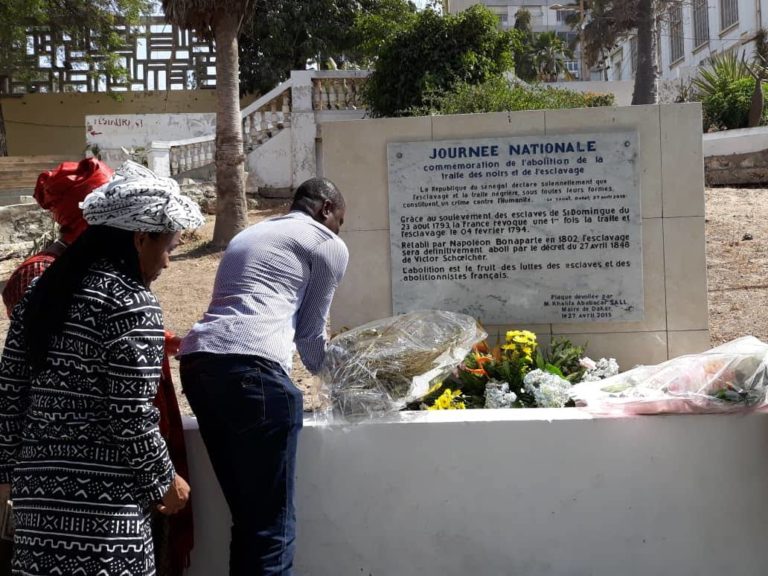
I remember returning to Nairobi after a fellowship in Dakar, Senegal. My friends were returning to their countries with excitement. I had no country to return to. I cried. I felt the weight of displacement in a way I had not allowed myself to feel before.
But something shifted after that. When I landed at Jomo Kenyatta International Airport, I felt the same feeling I used to feel when landing in El Geneina, in West Darfur, before the war, that city I love. I felt as if I were returning home. Not to Sudan, that homeland no longer exists in the way it did, but to a second home. To a place where I have built a life, where I have people who care about me and miss my presence. I remember when I returned, many people asked me where I had been and welcomed me back: Kenyan, Nigerian, and Cameroonian friends who live in the same building. I love Nairobi, where I can imagine a future.
This is belonging that refuses to wait for permission. It is not granted by governments or codified by laws. It is created in the spaces between people in shared meals, in laughter, in eating Sudanese or Kenyan food with Kenyan friends with whom we share a silent and also spoken solidarity.
Independence Day in Exile: Sudanese in Uganda
According to data from the United Nations Development Programme platform, as of April 2026, Kampala hosted more than 170,474 refugees and asylum seekers, including more than 92,893 Sudanese who arrived after the conflict began in April 2023. The Kiryandongo settlement in Uganda hosts 166,907 refugees and asylum seekers, of whom Sudanese make up 47.5%.
In the media, posts documenting Sudanese celebrations in Uganda circulate on social media. For example, a user named “Abeer Mustafa” posted a video on TikTok captioned: “Today we celebrate the freedom, culture, and rich future of the Pearl of Africa. Happy Independence Day, Uganda!” Such content reflects how Sudanese share their experiences across digital platforms and find in the cultural activities of host countries a space to express their belonging.
But behind the celebrations, humanitarian pressure remains. As of June 2026, Uganda hosted more than two million refugees and asylum seekers, including approximately 95,579 Sudanese, and the number of Sudanese refugees has more than quintupled since January 2024. Armed conflict is the primary cause of displacement for 78% of Sudanese families, and fear of forced conscription is the second factor.
Kenya's Visa Waiver Policy: Between Policy and Reality
In January 2024, Kenya announced the abolition of the visa requirement for all citizens of African countries, a significant step toward freedom of movement in East Africa. Under this policy, African citizens (except Libya and Somalia) can enter on arrival with a valid passport, without a visa, without a form, and without an electronic travel authorization (ETA) fee. Citizens of African countries not members of the East African Community can stay for a maximum of two months, while citizens of EAC member states (Burundi, Rwanda, Uganda, Tanzania, South Sudan) can stay for six months.
But the implementation of this policy on the ground is uneven. My personal experience illustrates this: despite the visa waiver policy, I was asked to pay a fee at the border. The gap between policy and reality is enormous. As a United Nations Economic Commission for Africa document noted, Kenya’s January 2024 decision effectively created obstacles to travel in some cases, as travelers who were previously exempt from visas were required to obtain an electronic travel authorization costing $34.
This is part of a broader pattern: policy reforms often look progressive on paper, but their implementation in the streets and at border points lags far behind.
The Colonial Echo at Every Border
The hostility Sudanese face at borders is not random. It is rooted in the colonial logic that taught us to see each other as strangers. The Berlin Conference did not just draw lines on a map; it created hierarchies of belonging. It taught us that some Africans are more African than others. It taught us that movement is a threat, that mobility must be controlled, and that “the other” must be kept out.
But this logic is a lie. Africans moved freely across the continent centuries before Europeans arrived. Trade routes connected Timbuktu to Cairo, Mombasa to Kilwa, the Nile Valley to the Horn of Africa. People migrated, intermarried, and built communities that transcended what we now call borders. The idea of “a borderless Africa” is not a distant dream; it is a return to something we already knew.
The African Union Protocol on Free Movement of Persons, adopted in 2018, is an attempt to reclaim this legacy. It calls for the free movement of people, goods, and services across the continent. It envisions an Africa where Sudanese can travel to Kenya without paying bribes, where Ugandans can work in South Sudan without fear, where the arbitrary lines of colonialism no longer determine who belongs and who does not.
But protocols alone are not enough. The gap between policy and reality remains wide. Political will is weak. Bureaucrats resist change. And ordinary people, migrants and hosts, are left to deal with the chaos.
What We Owe Each Other
So what does belonging mean in a borderless Africa? It means recognizing that our liberation is intertwined. It means understanding that the war in Sudan is not Sudan’s problem alone; it is Africa’s problem.
It also means telling our stories. The dominant narrative about African migration is one of crisis and threat. Migrants are portrayed as a problem to be managed, a security risk to be contained. But this narrative is false. Migration is not a crisis; it is a fact of human life. It is how we have always survived, adapted, and thrived. And when we center the voices of those who move their knowledge, their resilience, their dreams, we tell a different story. We tell a story of courage, community, and a belonging that refuses to be confined by borders.
I think of my friends in Uganda, celebrating Independence Day alongside Ugandans. They have found a way to belong, even if temporarily, even if fragile. They have taught me that home is not just a place; it is a practice. It is something we create together, in the spaces between us.
Writing Toward Freedom
As I write this, I realize my experience is one of thousands. Every Sudanese migrant has a story about the border she crossed, the bribe she paid, the friend she met, the moment she realized she was no longer just a refugee. These stories matter. They are the raw material for a new narrative, one that challenges the colonial logic of exclusion and imagines an Africa where everyone belongs.
The African feminist writer and scholar Rosebell Kagumire said that we do not just document policies; we challenge the stories that make borders seem permanent. This is the work. It is writing toward freedom. It is reclaiming our narrative from those who reduce us to statistics, problems, and threats.
It is insisting that Sudanese in Uganda, Kenya, Egypt, and Chad are not just survivors of war. We are community builders. We are culture bearers. We are Africans, and our belonging is not up for debate.
The borders may be colonial. The bureaucracy may be hostile. But the belonging we create in each other, in our shared spaces, in quiet moments of recognition, is ours. And it will remain so, always.
The writer is a feminist and a Borderless Africa Fellow 2026 from Sudan