By Ancel Langwa
What does it really mean to build a movement for liberation?
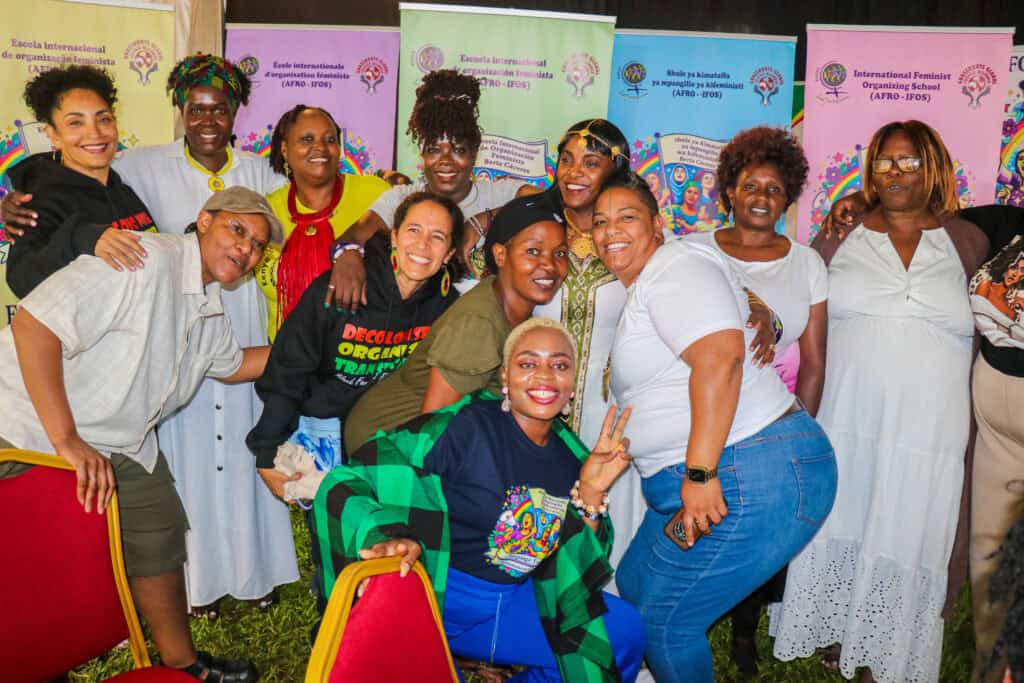
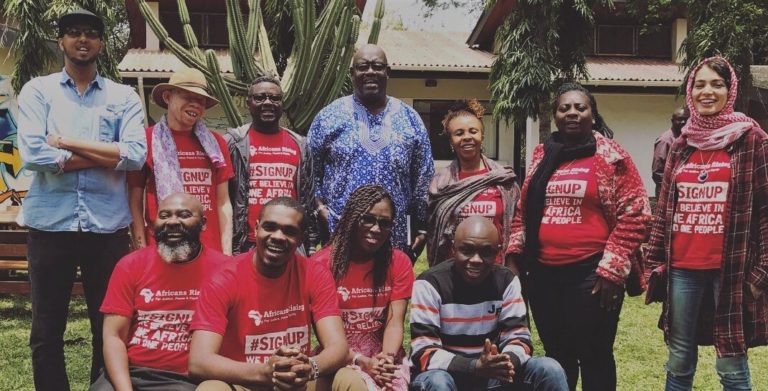
This was one of the questions I carried with me throughout my time in Nairobi, Kenya, where I joined 167 participants from 37 countries across Africa and the diaspora for the Afro International Feminist Organizing School (AFRO IFOS), held from September 11 to 18, 2026.
Through popular education, collective reflection, political analysis, songs, cultural practices, storytelling, and movement experiences, we were reminded that political education is not simply about acquiring knowledge. It is about developing our collective capacity to understand our realities and act together to transform them.
One of the strongest lessons for me was the importance of understanding the systems behind the issues we organise around. Through the “Tree of Oppression”, we explored capitalism, patriarchy, colonialism, racism, white supremacy, ableism, and extractivism, and how these systems reinforce one another. It made me reflect on how easily movements can focus on the problems they are responding to without always examining the power structures underneath them. For me, this is an important part of movement building: developing the political understanding to not only respond to injustice, but to understand and challenge the systems that produce it.
This also connected strongly with our work on Engendering African Social Movements (EASM) at Africans Rising. EASM is about supporting African movements to embed feminist principles into the way they organise and operate. AFRO IFOS made me think about this beyond simply encouraging women’s participation. It is also about looking at who has power, who makes decisions, whose knowledge is valued, how leadership is shared, how care work is recognised, and whether our internal ways of working reflect the values we advocate for externally. In that sense, the discussions on power, patriarchy, participation and care gave me new ways of thinking about the EASM work.
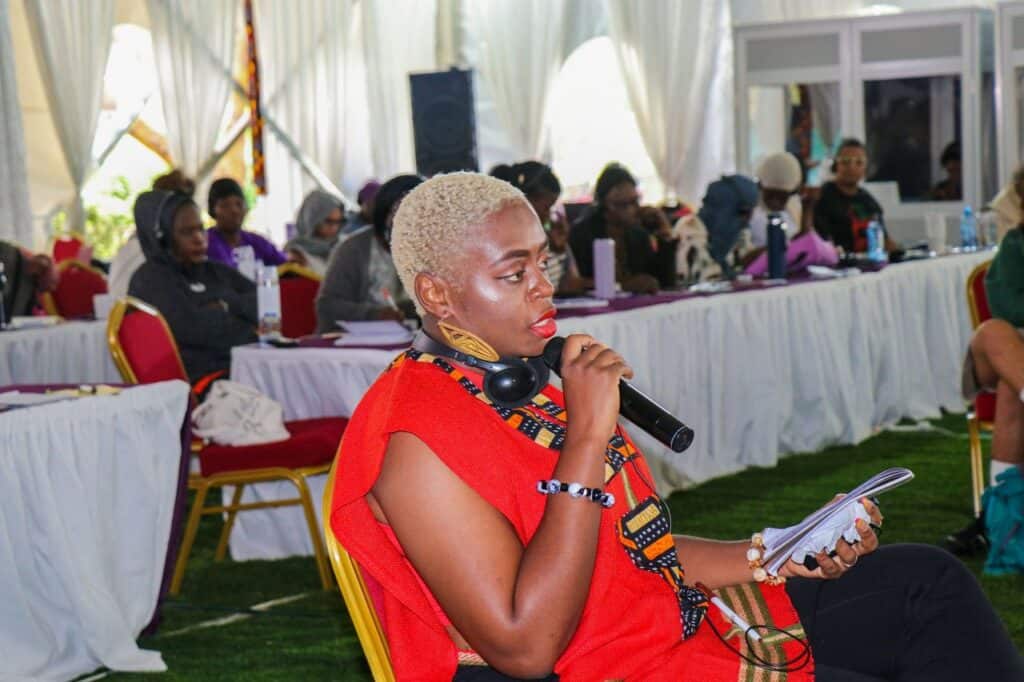
Decolonisation was another important thread throughout the School. We were challenged to think about it not only in relation to institutions and history, but also in our everyday organising. Whose knowledge do we value? Whose voices are heard? What languages do we use? How do we facilitate? This resonated strongly with me as someone working within a Pan-African movement. Our movements already carry knowledge from communities, cultures and lived experiences, and movement building should create space for this knowledge to be recognised and shared.
The final two days of the AFRO-IFOS focused on facilitation and brought many of these reflections together. I particularly liked the idea of facilitation as a “dance” between the facilitator and participants. A facilitator needs to listen, read the room, understand the context, and create space for participants to contribute their own knowledge. This has made me reflect on how we design political education and movement support spaces at Africans Rising.
Perhaps the most exciting part came at the end, when we were challenged to think about how to take AFRO IFOS into our own regions. I worked with another comrade from the Democratic Republic of Congo, and we challenged ourselves to explore developing an AFRO IFOS for the Central African region. I look forward to taking this beyond an idea and connecting it with the wider Pan-African movement-building work at Africans Rising.
There is still a lot to work out, but I like that the School ended with a challenge to take the learning somewhere. For me, that is what movement building is about. We learn, we reflect, we organise, and then we take what we have learned back to our movements and communities.