
From Dakar to a Movement: The birth of a Feminist for Borderless Africa Network!
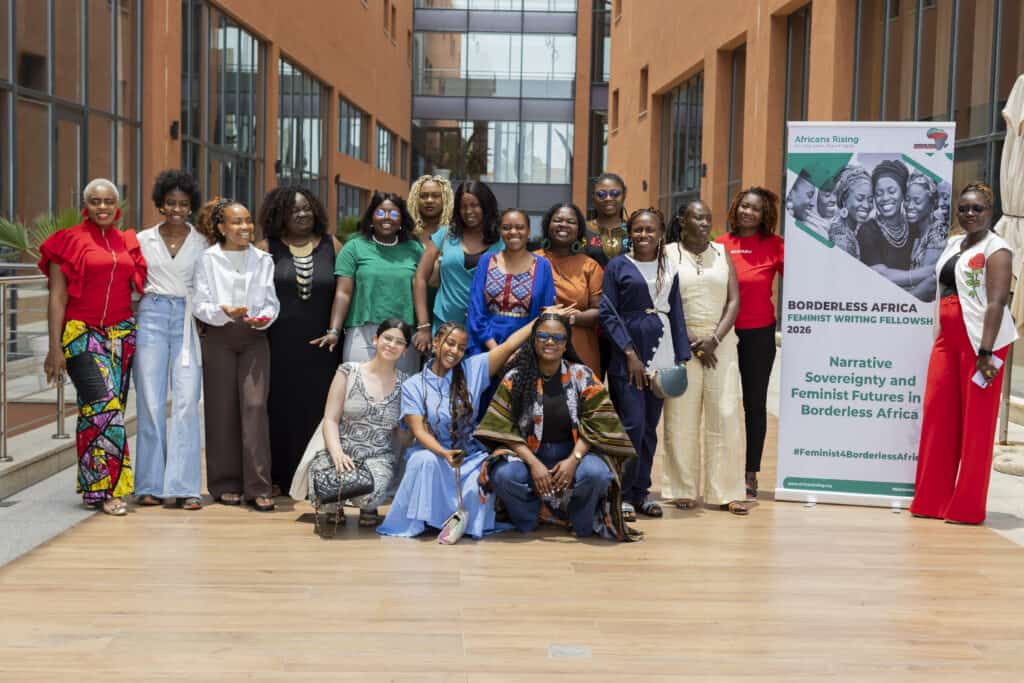
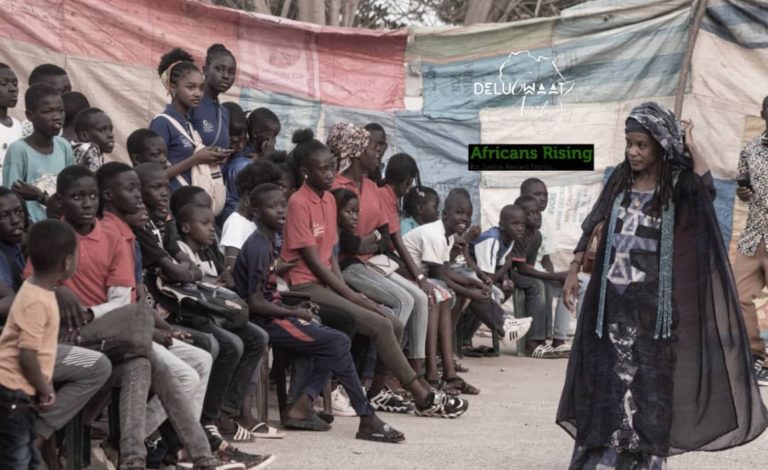
The women, armed with their pens, books, voices, and poetry, travelled miles away from all corners of the continent for one agenda: borderless Africa in our lifetime. While Dakar, as a city, presented a lot of political significance within the feminist struggle and the literary spaces, there was a bigger motivation for the 16 young women,13 countries in Africa: a common agenda, a common narrative of who gets to tell the stories of women in the borders.
The young feminists had key agendas to question and challenge: who decides what story goes? What narrative sells? What knowledge counts? What happens to our ancestral knowledge and, most importantly, who decides who belongs? All these questions were going to be answered, perhaps not in a single sitting but within the amazing feminist fellowship convening “the borderless Africa feminist writing fellowship“whose main objective is to imagine feminist futures in a borderless Africa and answer key questions: how post-colonial legacies shape the way we look at Africans, including the inherited borders?
What does a borderless Africa look like when African women are given an opportunity to imagine it? Mariama Ba couldn’t have put it any better in her book so long love letter, when she said: “women are the nation’s primary, fundamental root from which all else grows and blossoms “. Women pay the price of the borders more; it affects them disproportionately to men, yet in real life, these challenges do not find their way into policy conversations or tables of decisions.
If borders were gendered maybe the women in the border of togo and benin hilancodji would not be struggling to share with the world the challenges? Maybe the women in Kidira, on the Senegal-Mali border that hosts hundreds of daily traders, would not be having basic sanitation challenges, roads, lighting, and documentation that comes with harassment when they want to cross to Mali. For many women and girls of Africa, the border does not just represent a drawn line on the map; it’s part of their daily lives: they cross to sell their products, go to school, among others.
Their lives remind us that Africa’s borders are not just geographical; they determine who eats, who trades, whose work is recognized, and whose dignity is preserved.
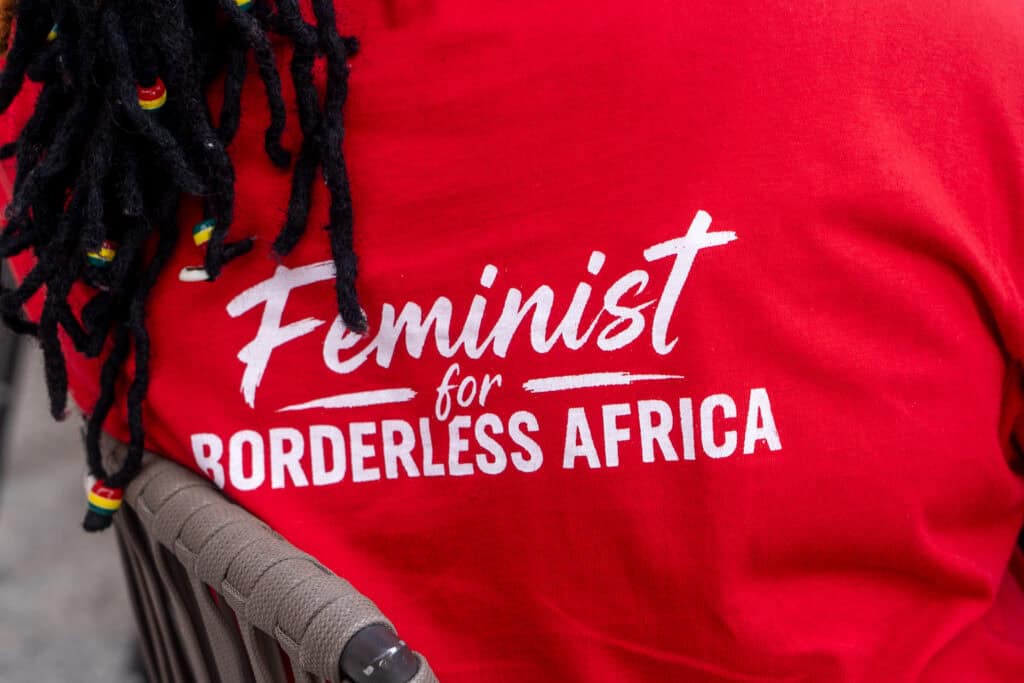
One story at a time, the borderless Africa feminist fellows, inspired by their own lived realities, committed to writing the stories in their countries and advocating for the ratification of the free movement protocol in their countries. They decided that Feminist for Borderless Africa would be the best space to organize and call feminists from across the continent and diaspora for one course: Borderless Africa.
Dakar was never meant to be a mere meeting point or an ending; it was the beginning itself. we came together with different backgrounds,histories ,stories and understanding of what it means to cross borders ,lived realities of the young women and girls in all their diversity but we discovered something powerful , our stories become more powerful when we are connected . The feminist for borderless africa nertwork is born from this connection,it’s a space to imagine a new africa ,collectively dream ,keep learning ,share experiences from the different countries ,challenge the predominat narratives on african movement and intra african movement, reclaim our narratives and tell the african stories bold and better because borderless africa is the liberation we owe to our childred the movement has just begun ! Feminist for a borderless Africa! Ashe enkai!
The author, Anne Rose Osamba, is a panafricanist and campaign and advocacy lead at Africans Rising.