
Many scholars have argued that the partition of Africa was inevitable due to geographical and political factors. Authors such as McCauley et al(2015) have maintained that the demarcation of Africa was already an ongoing geographical process. Yet in 1884, when European powers gathered around a table in Berlin to carve up the African continent, no African was invited, no African consented, and, most importantly, no African benefited.
Imagine waking up one day and being separated from everything you have ever known. Communities and cultures were divided overnight, and a neighbour who lived only three meters away suddenly became a foreigner on the same land. Decades later, the borders drawn during colonialism continue to divide Africans. The partition of Africa was largely driven by greed and the desire to possess and control the vast resources of the continent. Joshua Muhammed, in his article Who Benefits from Africa’s Resources?1, highlights Africa’s enormous wealth in natural resources and explains how, despite this abundance, many African countries and their citizens continue to gain little benefit from them.
When the African Union (AU) was formed, many Africans hoped it would mark the beginning of a more united continent. People envisioned a future where Africans would no longer face high visa fees when crossing into neighbouring African countries, or the frustration of exchanging currencies that would become useless once they returned home. The AU’s mission statement speaks of “an integrated, prosperous and peaceful Africa, driven by its citizens and representing a dynamic force in the global arena.” Many believed the organisation would advance the ideals of the African Renaissance and Pan-Africanism. However, the current reality suggests that the AU’s performance remains far from its vision. Across the continent, unconstitutional changes of government continue to rise, with some perpetrators later contesting elections and even becoming presidents. Afrophobic attacks by Africans against fellow Africans persist, while the silence of African leaders on critical continental issues often undermines the unity and progress the AU was created to achieve. Afrophobia continues to be a serious challenge in some African countries. Between April and May 2026, South Africa experienced another wave of afrophobic attacks2. It is deeply disturbing to witness fellow Africans being targeted in a nation that, only three decades ago, received immense solidarity, support, and mobilisation from Africans across the continent during the anti-apartheid struggle. Even more concerning is that some Africans continue to defend these attacks, revealing the deep divisions that still exist within the continent.
On May 25, 2026, Africa commemorated African Liberation Day, marking 63 years since the founding of the Organisation of African Unity, the predecessor of the African Union. Yet despite decades of independence and liberation, Africa remains divided, while the pursuit of unity, justice, peace, and dignity continues to be a struggle.
A critical question remains: who benefits from a divided Africa? A weak and dependent Africa often serves the interests of foreign powers and some African leaders who thrive on fragile institutions, weak economies, and closed borders that help preserve their political power. Governments that rely heavily on foreign support may also lack the incentive to pursue genuine continental unity. Africa’s disunity is therefore sustained by greed and self-interest. To move forward, Africans must identify these barriers and collectively challenge them.
What a United Africa Looks Like
The idea of a united Africa has long been championed by African thinkers and leaders. The 1958 All-African Peoples’ Conference held in Accra, Ghana, was one of the key moments that advanced conversations around African unity. During the conference, discussions on the Commonwealth of African States and the issue of artificial colonial boundaries highlighted the shared belief that African unity was essential for independence, security, and the well-being of African people 3.
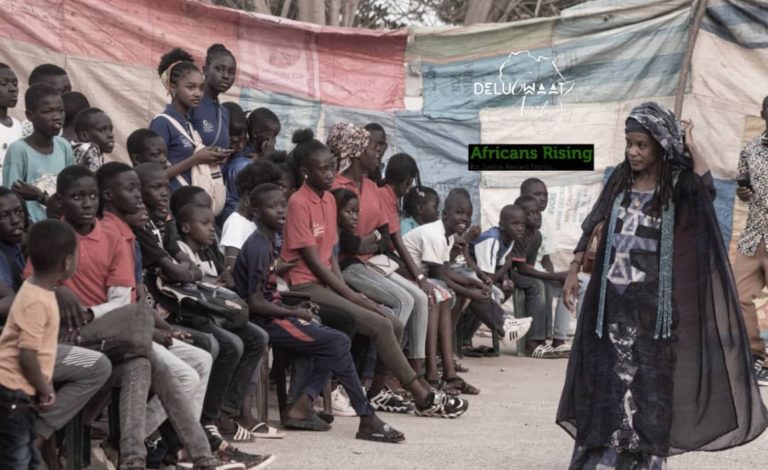
Building on this vision, Africans Rising has been engaging Africans across the continent to gather collective perspectives on what a united Africa should look like in the 21st century. During the 2024 All-African Movement Assembly in Accra, a signature event held every two years by Africans Rising, participants reached a broad consensus on the vision and values that should shape a united Africa4.
Economically, many Africans envision a continent that is less dependent on foreign financial systems and more grounded in its own collective strength. A united Africa would create opportunities for a common currency backed by the continent’s vast natural resources and economic potential. Such a system could strengthen intra-African trade, reduce unemployment, and position Africa as a stronger global economic force. Beyond economic integration, this vision reflects a desire for greater self-reliance and reduced dependence on external powers such as the American dollar.
Politically and in matters of global governance, Africa’s fragmentation continues to weaken its collective influence. Despite being a continent of over a billion people, Africa still struggles to secure unified representation in key global decision-making spaces such as the United Nations Security Council. Many Africans believe that a united continent would strengthen Africa’s bargaining power, improve coordination, and ensure that African interests are represented with a stronger and more independent voice on the global stage.
In terms of peace and security, participants highlighted the need for stronger continental solidarity and coordination. Across the continent, countries continue to face insecurity, terrorism, and conflict, particularly in regions such as East Africa and parts of West Africa. Yet responses often remain fragmented and nationally focused. A united Africa would allow for stronger cooperation in intelligence sharing, peacekeeping, and collective security responses. Rather than individual countries managing crises alone, a coordinated continental approach could strengthen Africa’s ability to address insecurity and protect its people.
The discussions also reflected concerns about the implementation of the African Continental Free Trade Area (AfCFTA). While AfCFTA presents significant opportunities for economic integration, many Africans feel that its benefits may not fully reach ordinary people if barriers to the free movement of Africans remain in place. Participants argued that true continental integration should not only allow the movement of goods and services, but also guarantee easier mobility for African citizens across the continent. Without this, economic integration risks benefiting institutions and external investors more than everyday Africans.
Infrastructure development was another major area of discussion. Many African countries continue to pursue isolated national infrastructure agendas without sufficient continental coordination. Participants emphasised that a united Africa would require integrated infrastructure systems, including connected rail networks, digital systems, transport corridors, and energy cooperation designed to support continental integration rather than fragmented national interests. Such infrastructure would strengthen trade, mobility, communication, and economic development across Africa.
Ultimately, the vision emerging from these dialogues is one of an Africa that is politically coordinated, economically integrated, socially connected, and collectively empowered. It is a vision rooted in solidarity, self-determination, and the belief that Africa’s future can be stronger through unity.
Why a United Africa Matters
Africa possesses vast natural resources, a growing young population, and immense economic potential, yet many Africans continue to experience poverty, inequality, unemployment, underdevelopment and afrophobia. Despite being rich in minerals, land, energy resources, and cultural diversity, the continent has not fully benefited from its own wealth. This reality continues to raise important questions about how Africa can better organise itself to ensure that its resources contribute to the development and well-being of its people.
As George Prince argues in his article on the benefits of a united Africa5 African unity would not only benefit Africans, but also contribute positively to global development, stability, and economic growth. A stronger and more coordinated Africa would become a major global partner capable of contributing solutions to global challenges while ensuring fairer participation in international systems.
The growing call for African unity is therefore not simply about political symbolism, but about building a future that guarantees economic justice, security, dignity, and shared prosperity for Africans. The challenge facing the continent today is no longer whether Africa should unite, but rather how that unity can be practically achieved. This requires stronger continental institutions, people-centred policies, freer movement across borders, economic cooperation, and collective political will that prioritises the interests of Africans above narrow national or external interests.
Citations
https://africaanalyst.com/the-great-benefits-of-a-united-africa-to-the-world/
All Africa Movement Assembly(AMMA) 2024 Report
https://www.africanleadershipmagazine.co.uk/who-truly-benefits-from-africas-resources/
https://www.hrw.org/news/2026/05/20/south-africa-new-waves-of-xenophobic-attacks
McCauley, J. F., & Posner, D. N. (2015). African Borders as Sources of Natural Experiments.
Promise and Pitfalls. Political Science Research and Methods, 3(2)
https://sahistory.org.za/sites/default/files/archive-files/towards_a_united_africa_by_n.numade.pdf
Authors
- Prince Akpah (MA) || Pan-African Solidarity & Mobilisation Lead Officer, Africans Rising
- Angela Ngulube || Digital Support Officer, Africans Rising
https://www.africanleadershipmagazine.co.uk/who-truly-benefits-from-africas-resources/
https://www.hrw.org/news/2026/05/20/south-africa-new-waves-of-xenophobic-attacks
https://sahistory.org.za/sites/default/files/archive-files/towards_a_united_africa_by_n.numade.pdf
https://africaanalyst.com/the-great-benefits-of-a-united-africa-to-the-world/