
We Are Not Asking to Be Seen. We Are Demanding Justice
By: Esther Aoko
How many more generations of women and girls of African descent must prove that they are worthy of rights that should have been guaranteed from the beginning?
How many must fight to be heard before they are believed? How many must overcome impossible odds before their success is celebrated instead of treated as an exception? How many more times must we applaud resilience while ignoring the systems that make resilience necessary?
These are difficult questions. They should be.
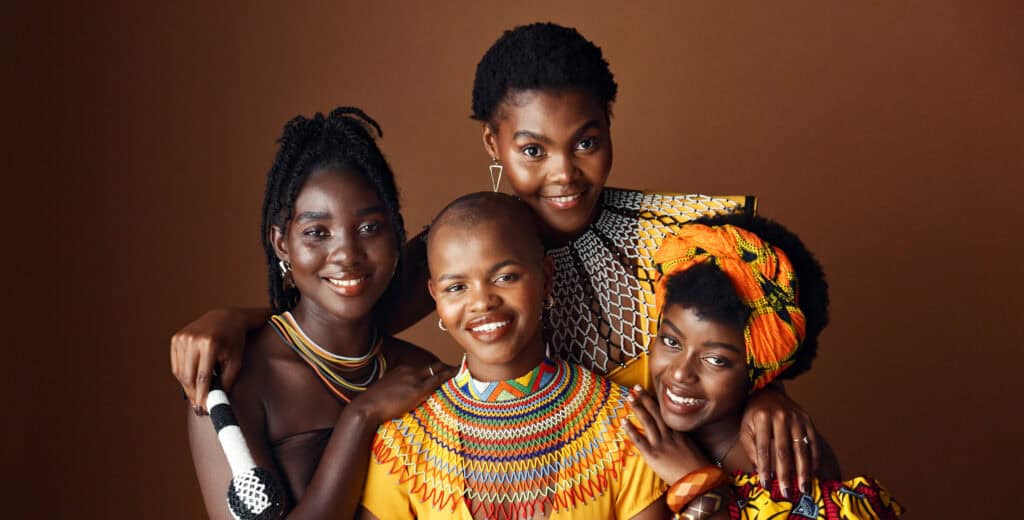
On 25 July, the world marks the International Day of Women and Girls of African Descent, a day established by the United Nations to recognize the contributions, leadership, and lived experiences of millions of women and girls across Africa and the diaspora. It is a day to celebrate. But it is also a day to confront an uncomfortable truth: despite generations of struggle, too many women and girls of African descent are still denied the dignity, opportunities, and human rights they deserve.
This is not because they lack talent, ambition, or leadership.
It is because systems built on inequality continue to determine whose voices are heard, whose knowledge is valued, whose bodies are protected, and whose futures are considered worth investing in.
Across the world, women and girls of African descent continue to face overlapping forms of discrimination based on race, gender, age, class, disability, and geography. These inequalities show up everywhere, in classrooms where girls are discouraged from dreaming big, in workplaces where women remain underrepresented in leadership, in communities where violence against women persists, in shrinking civic spaces where feminist activists are targeted, and in health systems where access to quality care is still unequal.
These injustices are not isolated incidents. They are connected.
When a girl is denied an education, her rights are diminished. When a woman is excluded from decision-making, democracy is weakened. When activists defending human rights are silenced, entire communities lose their voice. When policies are designed without the participation of those most affected, inequality becomes embedded for another generation.
Yet this is only one side of the story.
The other side is one of courage, resistance, and transformation.
Across Africa and the diaspora, women and girls of African descent are organizing communities, leading social movements, preserving culture, defending democracy, driving innovation, creating businesses, producing knowledge, and shaping public policy. They are changing narratives that have for too long portrayed them only through the lens of struggle.
We have witnessed this leadership in recent years as African women have stood at the forefront of movements for democratic accountability, climate justice, economic justice, digital rights, and gender equality. Young feminists have built powerful online and offline movements despite increasing attacks on civic space. Grassroots organizations have continued supporting communities during conflict, economic hardship, and humanitarian crises long after international attention has shifted elsewhere.
These stories deserve to be told, not because they are extraordinary, but because they reveal a simple truth: women and girls of African descent have never waited for permission to lead.
Still, leadership should not require overcoming injustice at every turn.
The resilience of African women should never become an excuse for governments, institutions, or societies to avoid addressing the inequalities they face. We cannot continue celebrating women for surviving systems that should have been transformed long ago.
Real justice requires more than symbolic recognition.
It requires governments to uphold human rights without exception. It requires investment in quality education, equitable healthcare, economic opportunities, and social protection. It requires ending violence against women and girls in all its forms. It requires protecting human rights defenders and feminist activists. It requires collecting data that makes inequality impossible to ignore. Above all, it requires ensuring that women and girls of African descent are not simply invited into conversations but are leading the decisions that shape their lives and communities.
At Africans Rising, we believe that the struggle for the rights of women and girls of African descent is inseparable from the struggle for Africa’s liberation. A continent cannot truly prosper while millions continue to face discrimination simply because of who they are. Justice cannot exist where exclusion persists. Freedom cannot be complete while inequality remains.
This International Day of Women and Girls of African Descent, let us move beyond celebration.
Let us challenge harmful stereotypes wherever they exist. Let us amplify the voices of African women and girls who are transforming their communities every day. Let us support feminist movements and grassroots organizations that are building a more just future. Let us hold our leaders accountable, not only for the promises they make, but for the lives they improve.
Because the women and girls of African descent are not waiting to be empowered.
They are already leading.
The question is whether our institutions, our governments, and our societies are finally ready to stand with them.
Until every woman and every girl of African descent can live free from discrimination, violence, and exclusion, our work is not done. And neither is our collective responsibility.
Their rights are human rights.
Their freedom is Africa’s freedom.
Their future is our shared future.