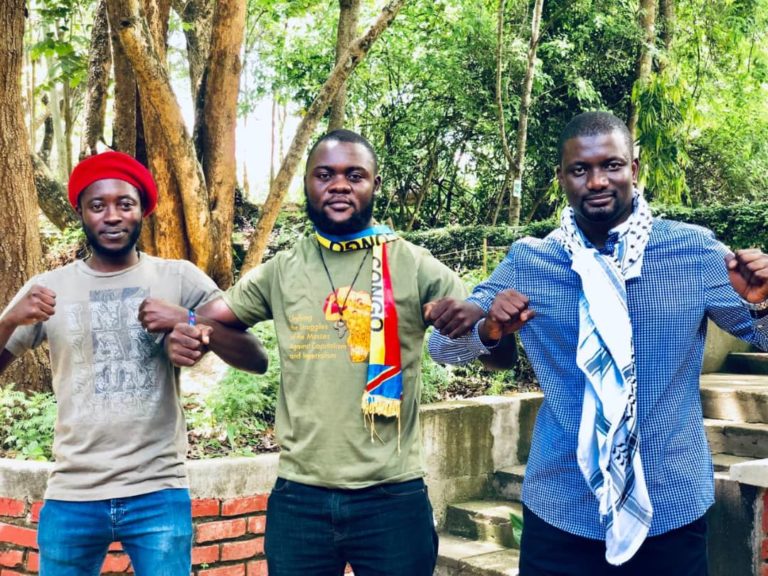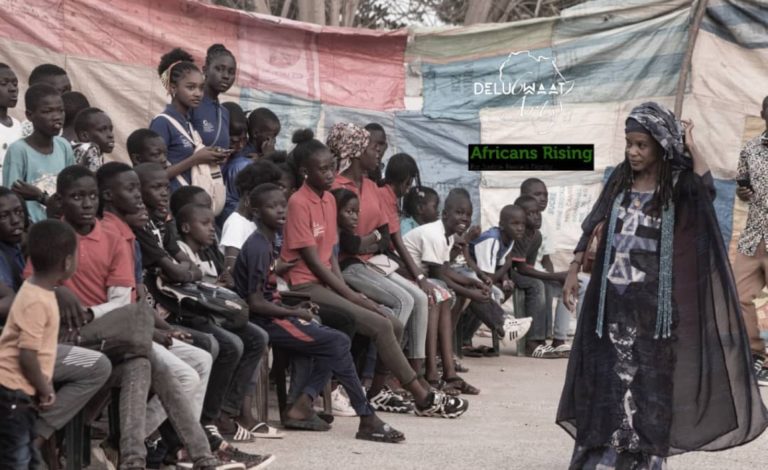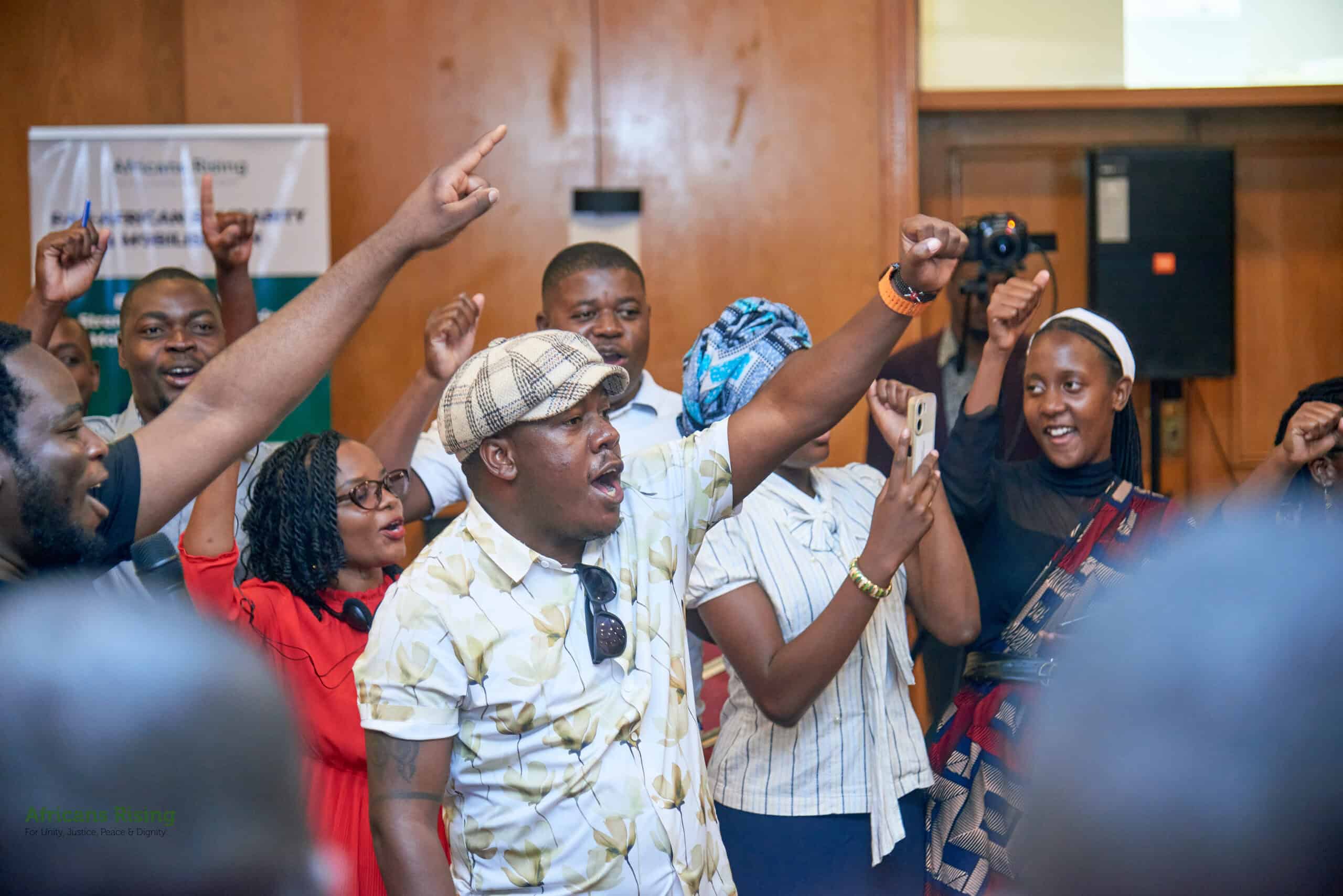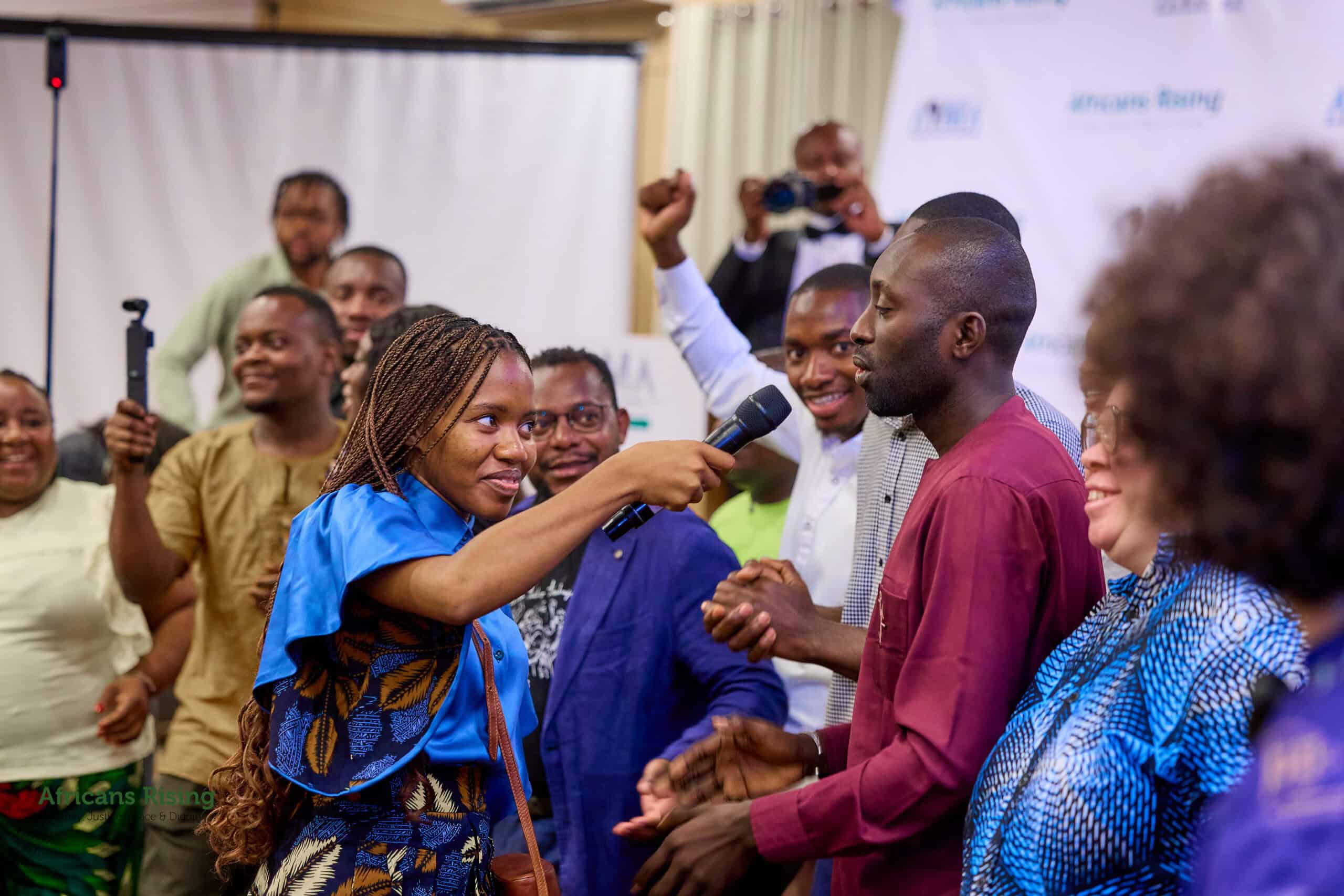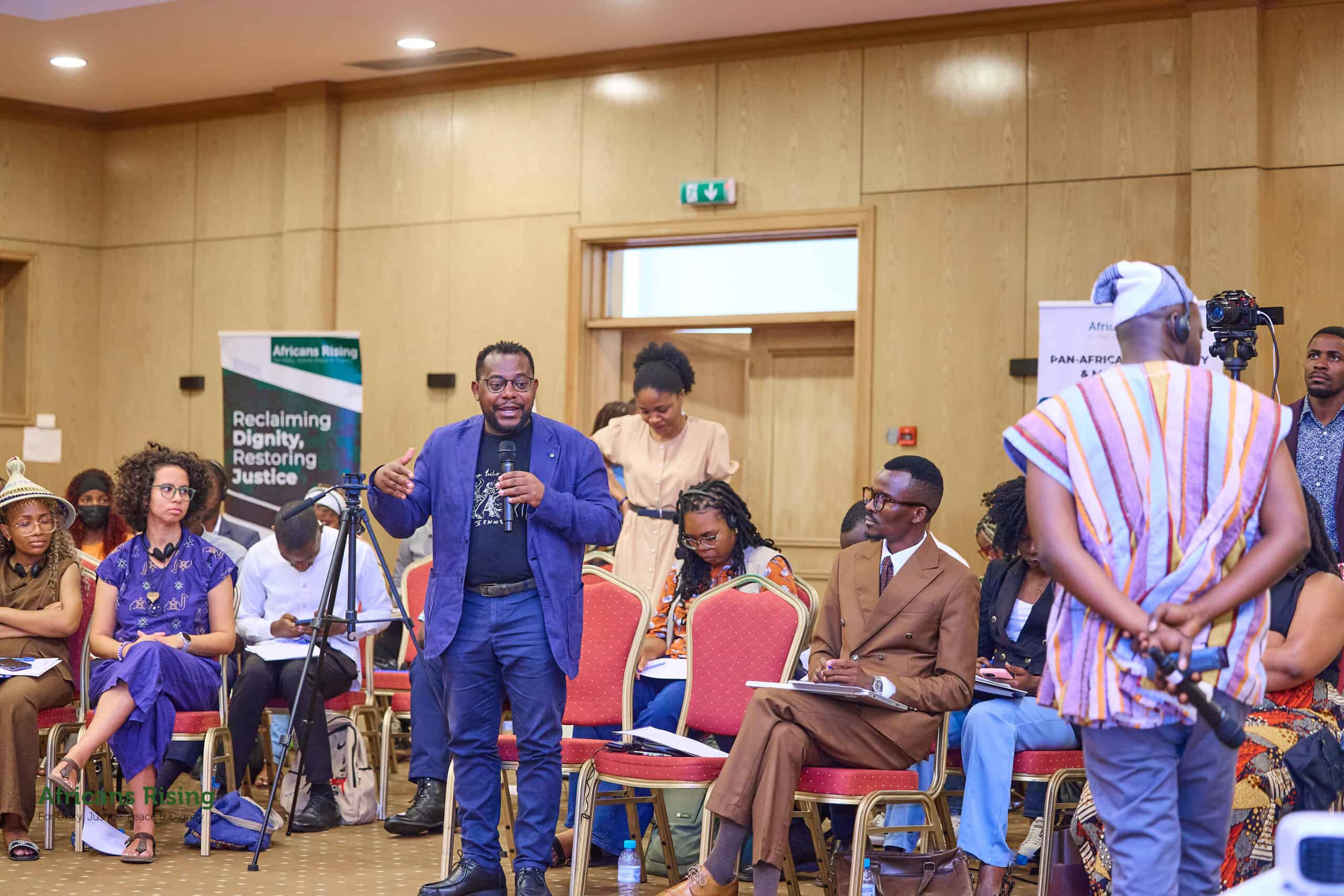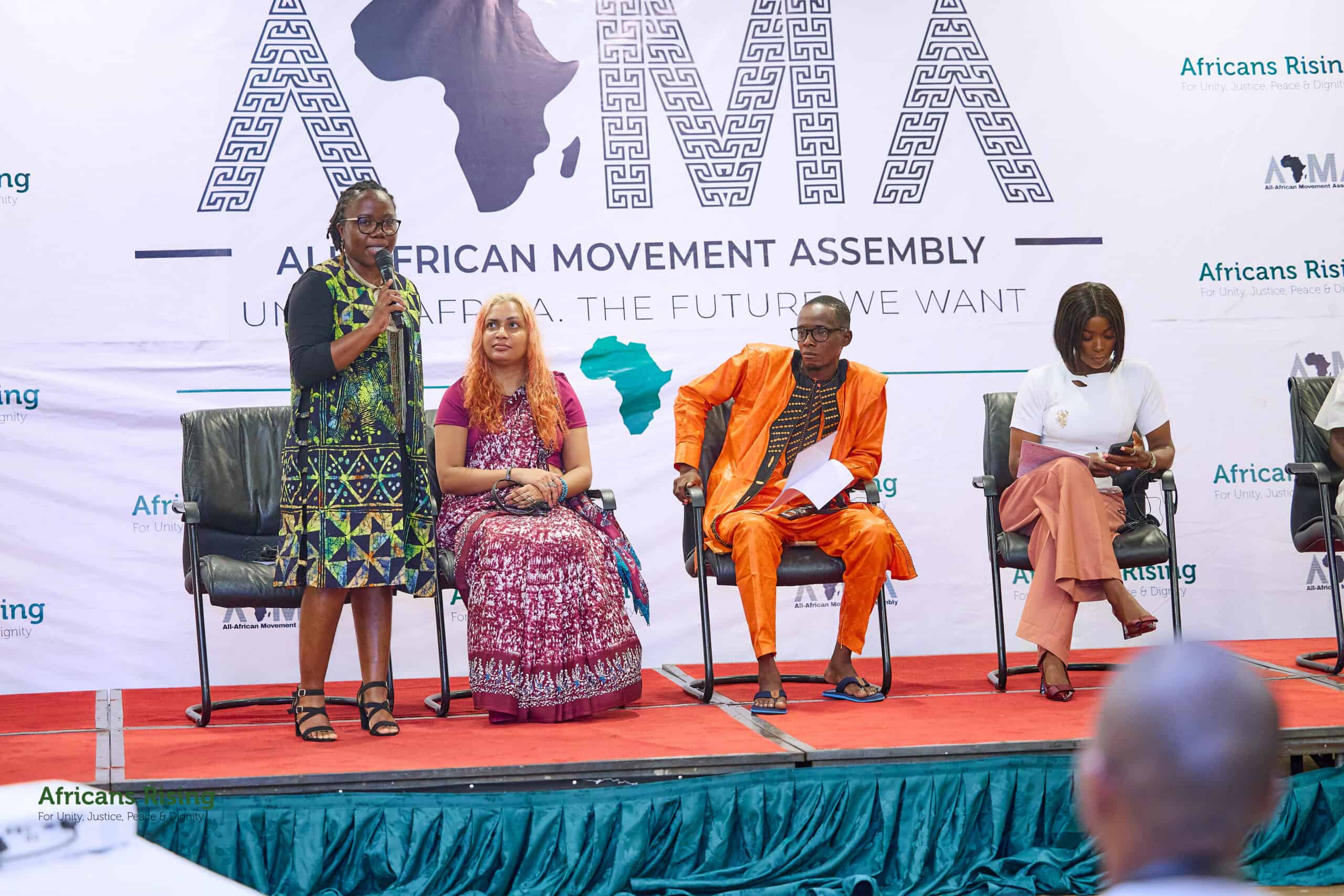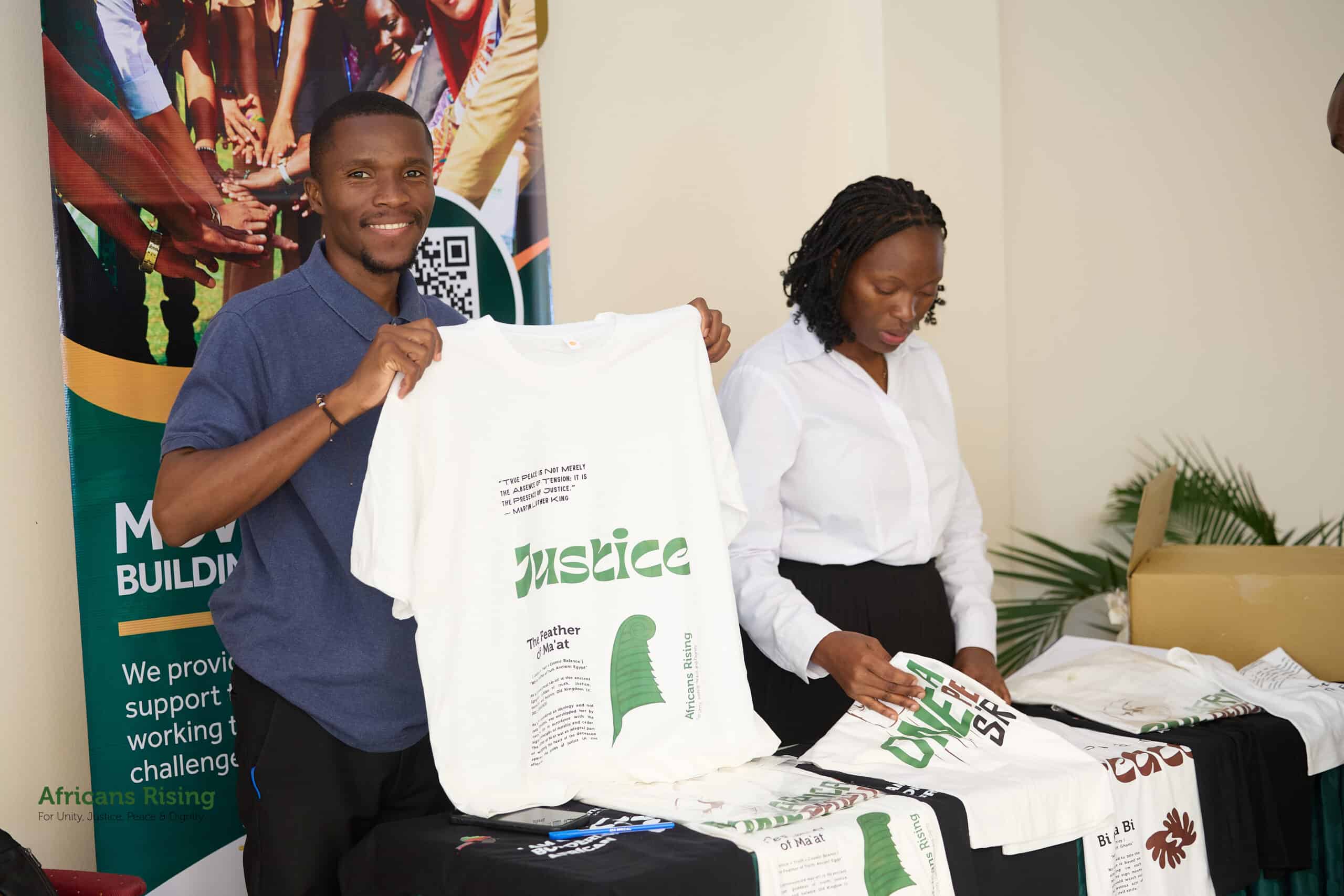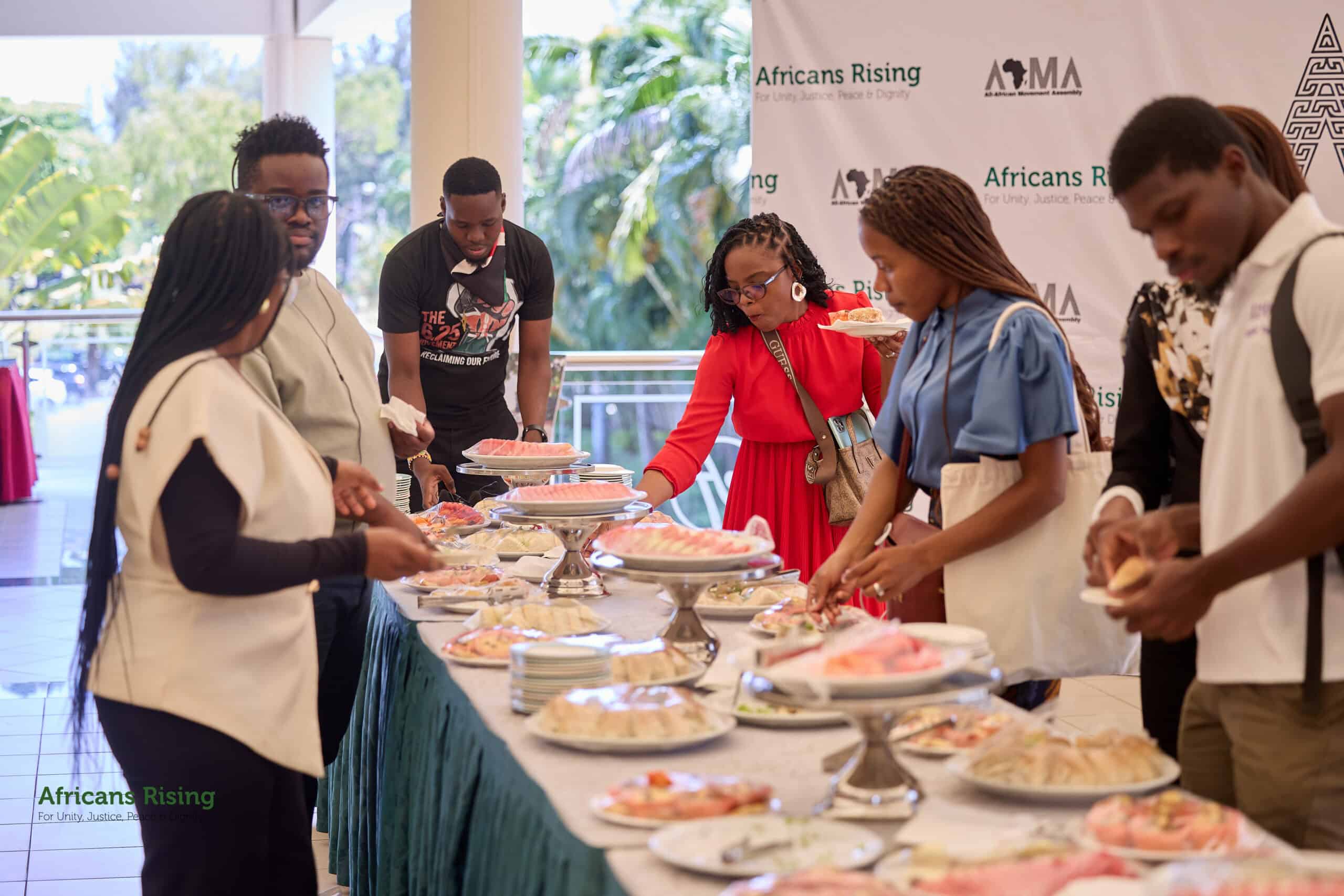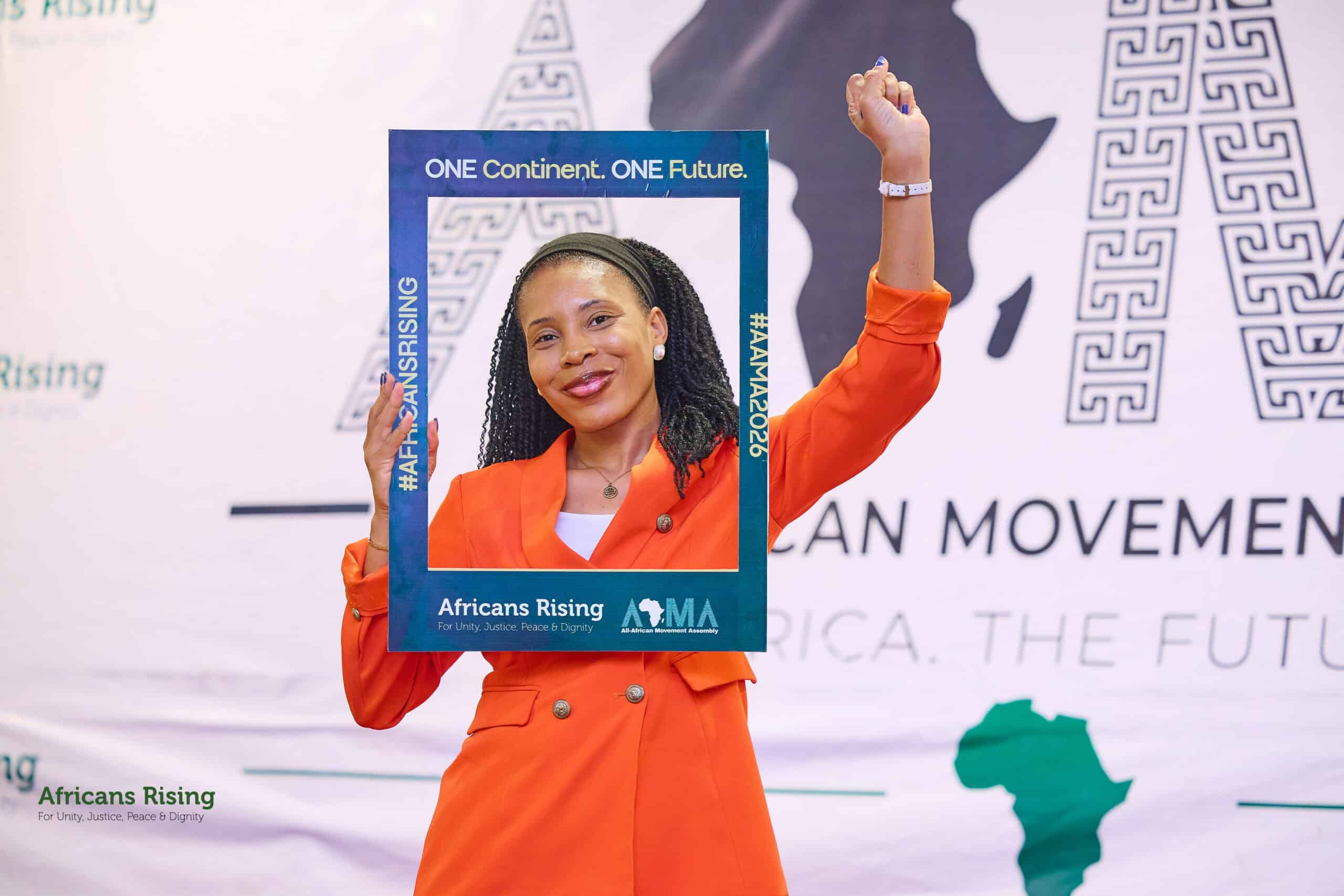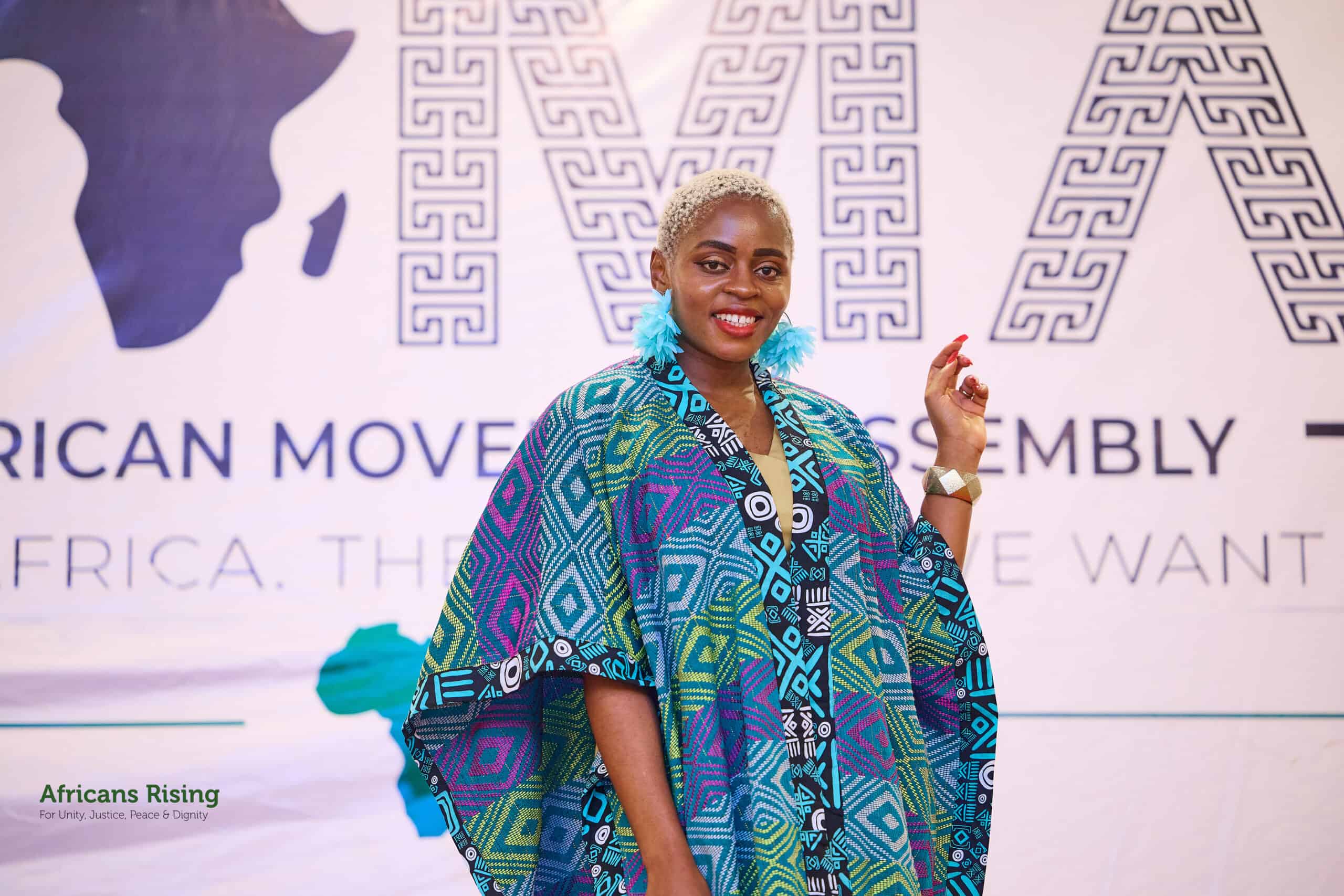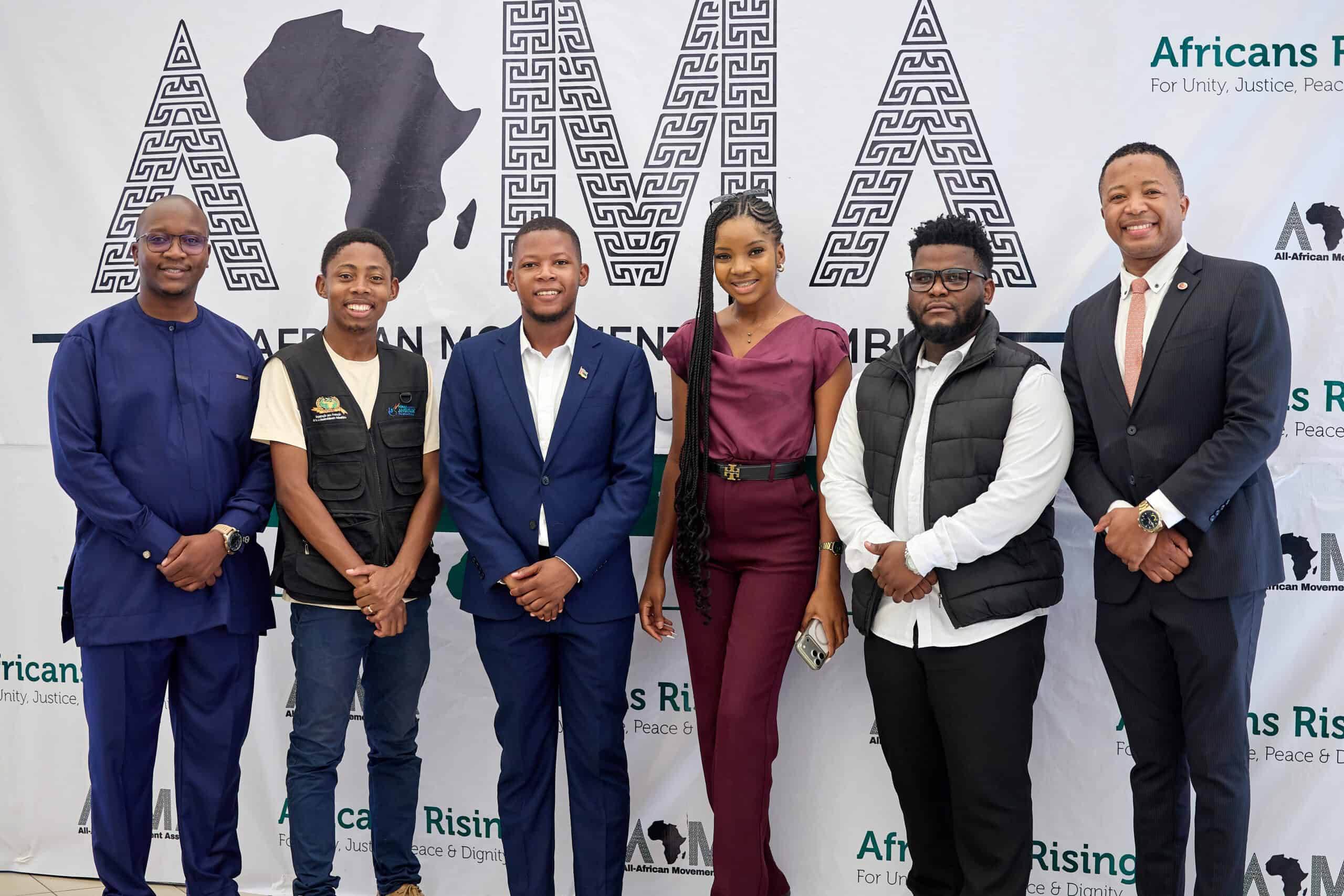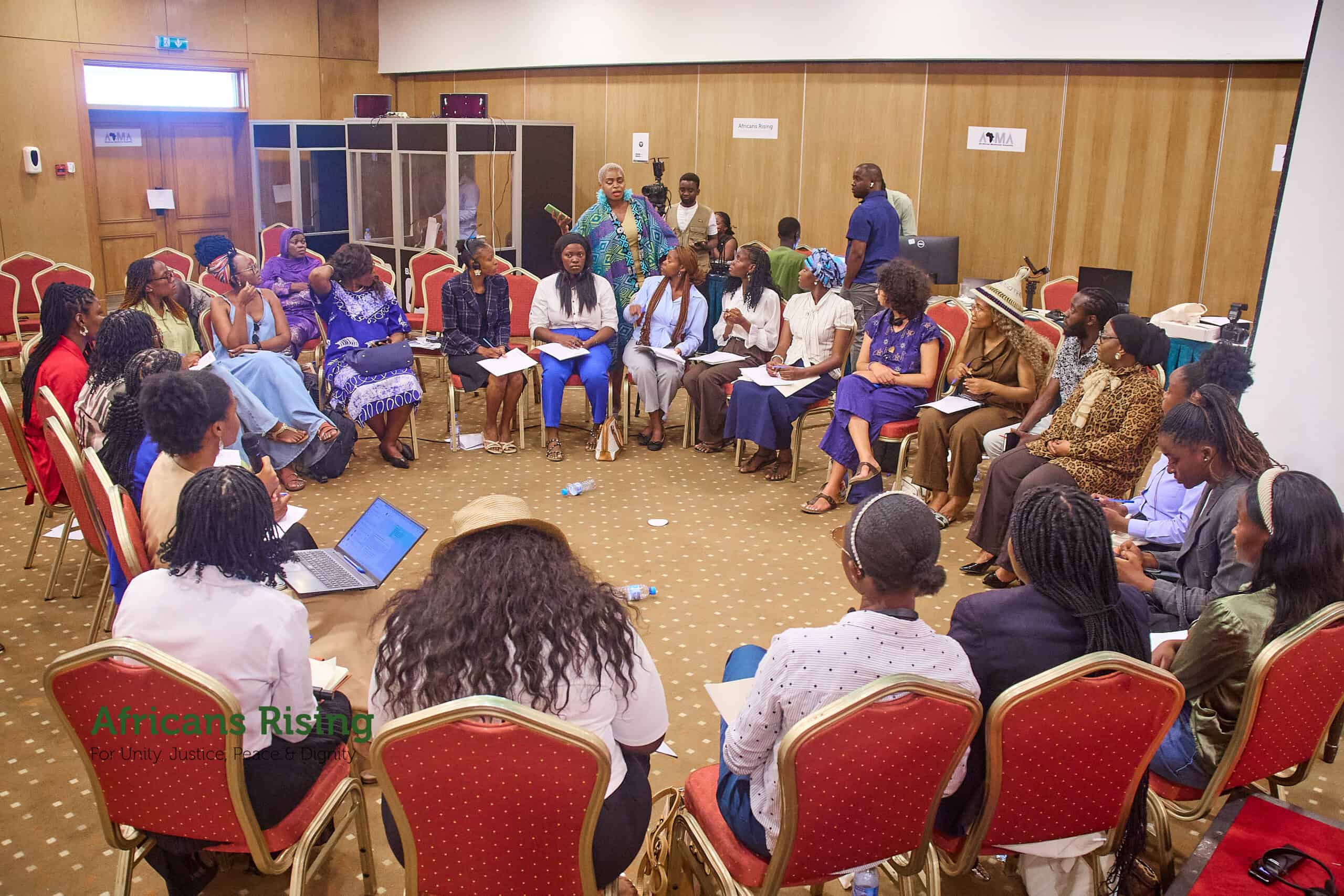
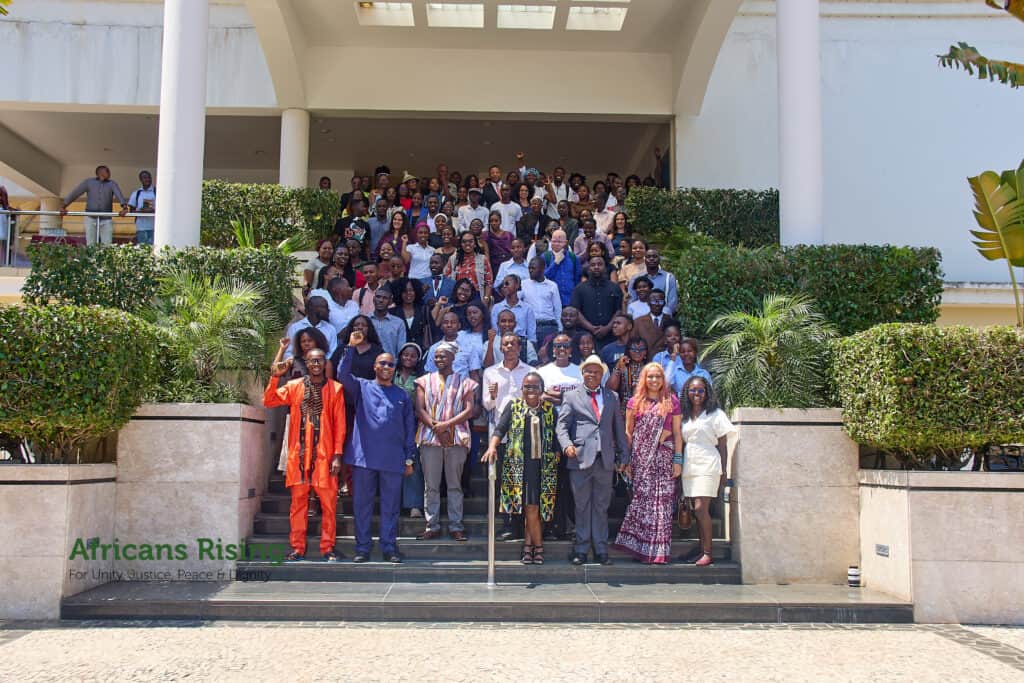
AAMA 2026 kicked off with the same electric defiance that defined our previous assemblies [AAMA 2022, AAMA 2024]. Kenyan revolutionary fighters, comrades Mark Amiani and Nawa Sitali, led a powerful, high-morale liberation chant, reminding the room that the structural change we demand requires collective energy, power, and unyielding strength. Charged by this revolutionary spirit, delegates from over 22 African countries rose to their feet, singing at the top of their voices and dancing in a unified circle, a physical manifestation of our shared commitment to a liberated continent.
Welcoming the delegation to Maputo, Mozambican comrade David Fardo grounded the room in the sober reality of the host nation. He noted the immense weight of hosting this assembly at a time when young local activists have recently lost their lives fighting for democratic change. In their honor, he led the assembly in a solemn minute of silence, remembering all frontline defenders who paid the ultimate price for human rights.
Taking to the rostrum, Africans Rising Coordinating Collective Co-Chair Lucky Ninsiima delivered a stirring keynote address. “True liberation is impossible without radical solidarity,” Ninsiima declared, mapping out the movement’s rapid-response interventions that have shielded activists navigating state-sponsored repression across the continent. She reminded the audience that AAMA 2026 is our collective launchpad to move past corporate policy rhetoric and actively organize for structural power.
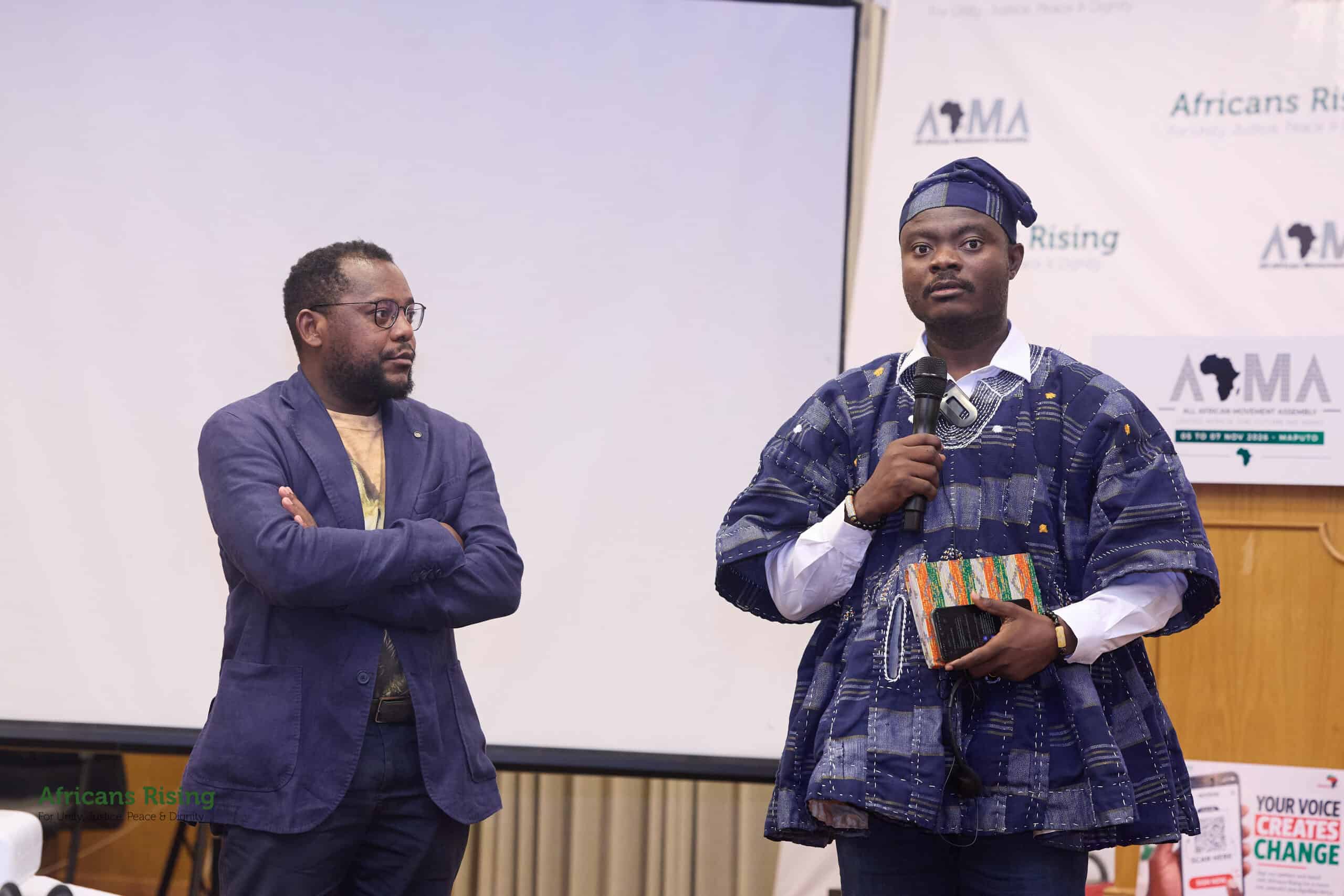
Movement Coordinator Hardi Yakubu, popularly known as the “Son of Africa” and dressed in the iconic traditional Ghanaian smock favored by Kwame Nkrumah, then stepped forward to unmask the modern faces of tyranny. He played a chilling video clip titled “It’s time to put the imperial hat back on,” featuring Erik Prince, the notorious founder of the private military corporation Blackwater. In the footage, Prince openly advocates for the recolonization of Africa to keep our people divided and systematically exploit our natural resources. Yakubu emphasized that in this era of deep global uncertainty, our only logical survival strategy is total African unity. He challenged the room to deeply imagine what we are fighting for, warning that modern imperial warfare relies on keeping the true enemy hidden.
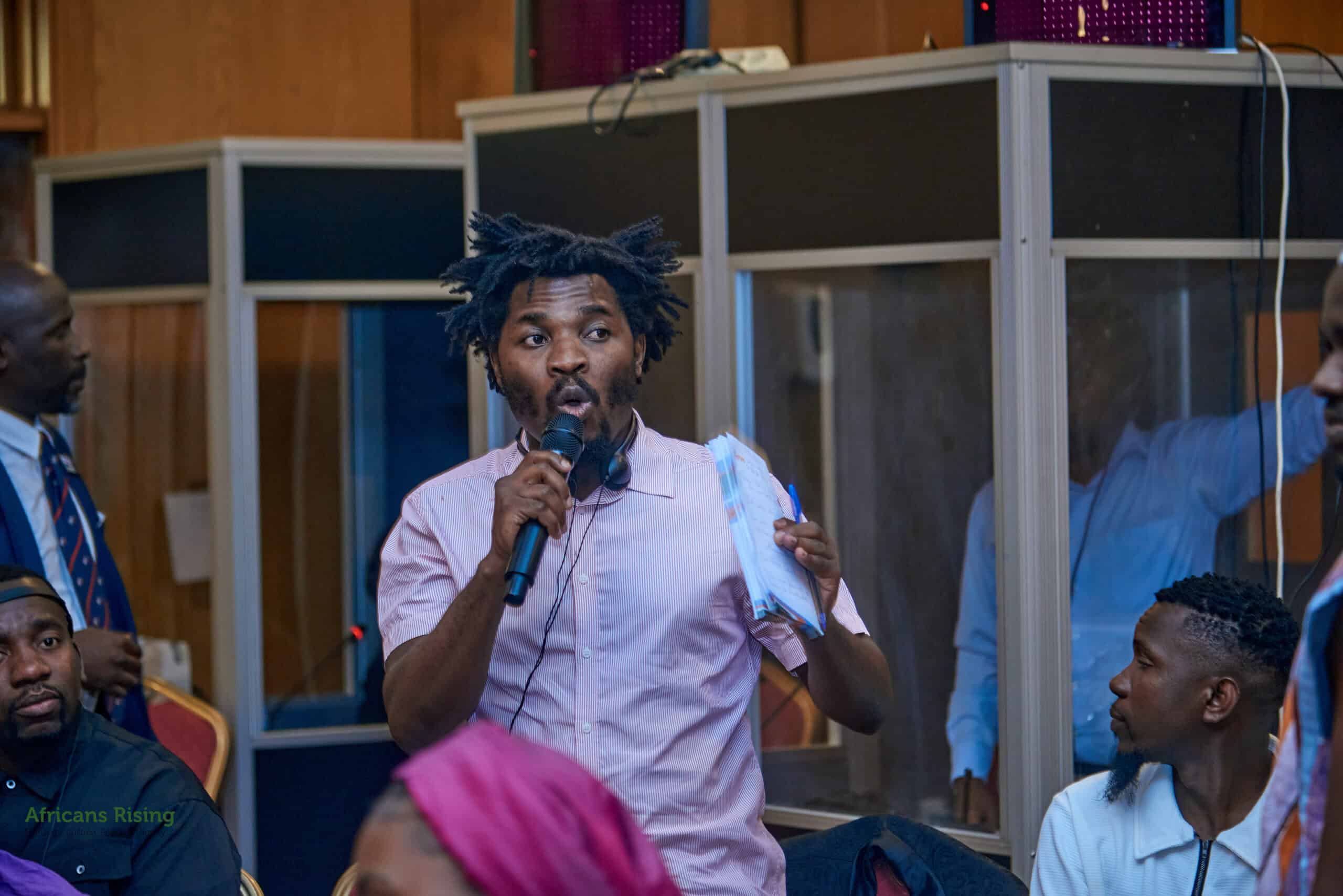
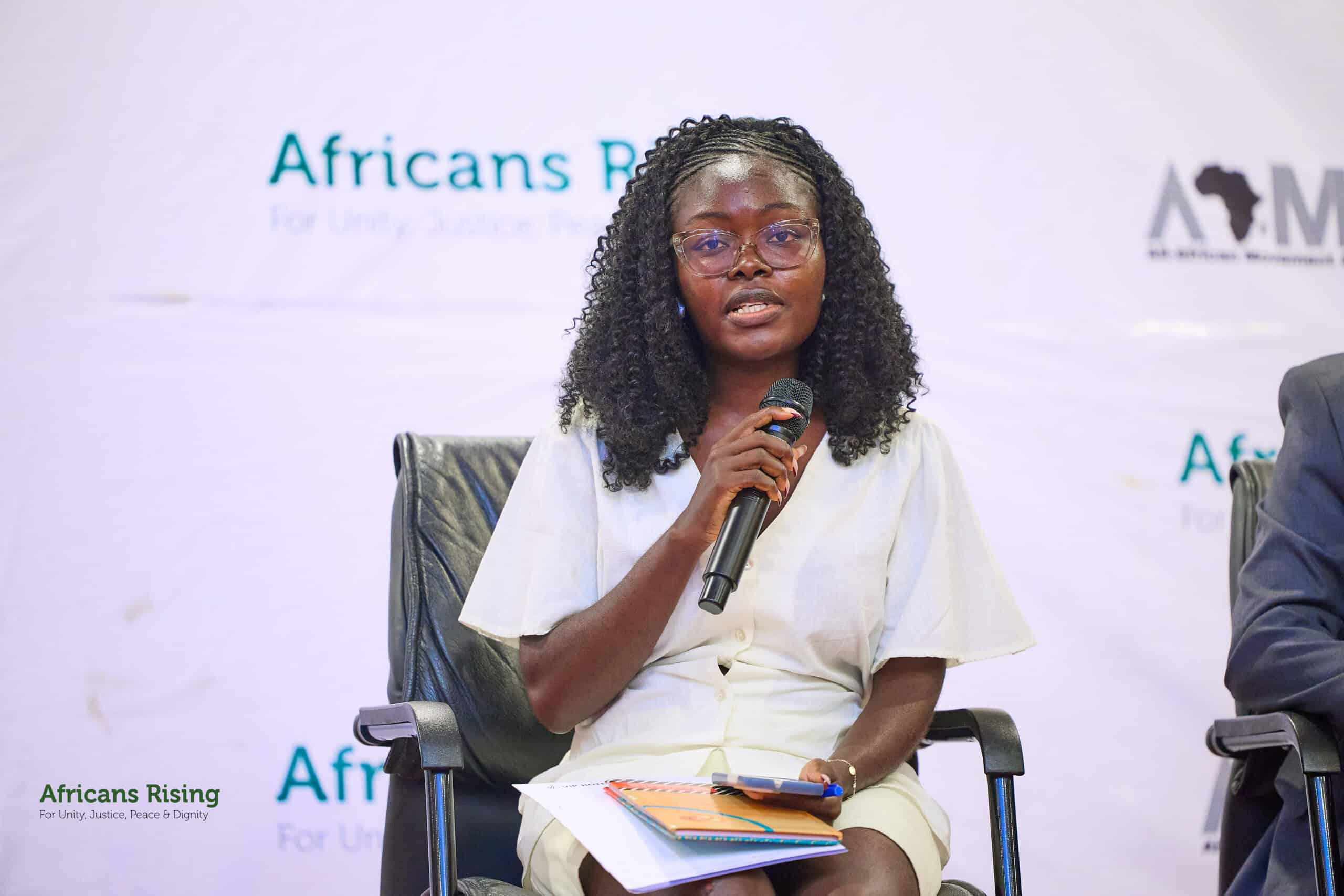
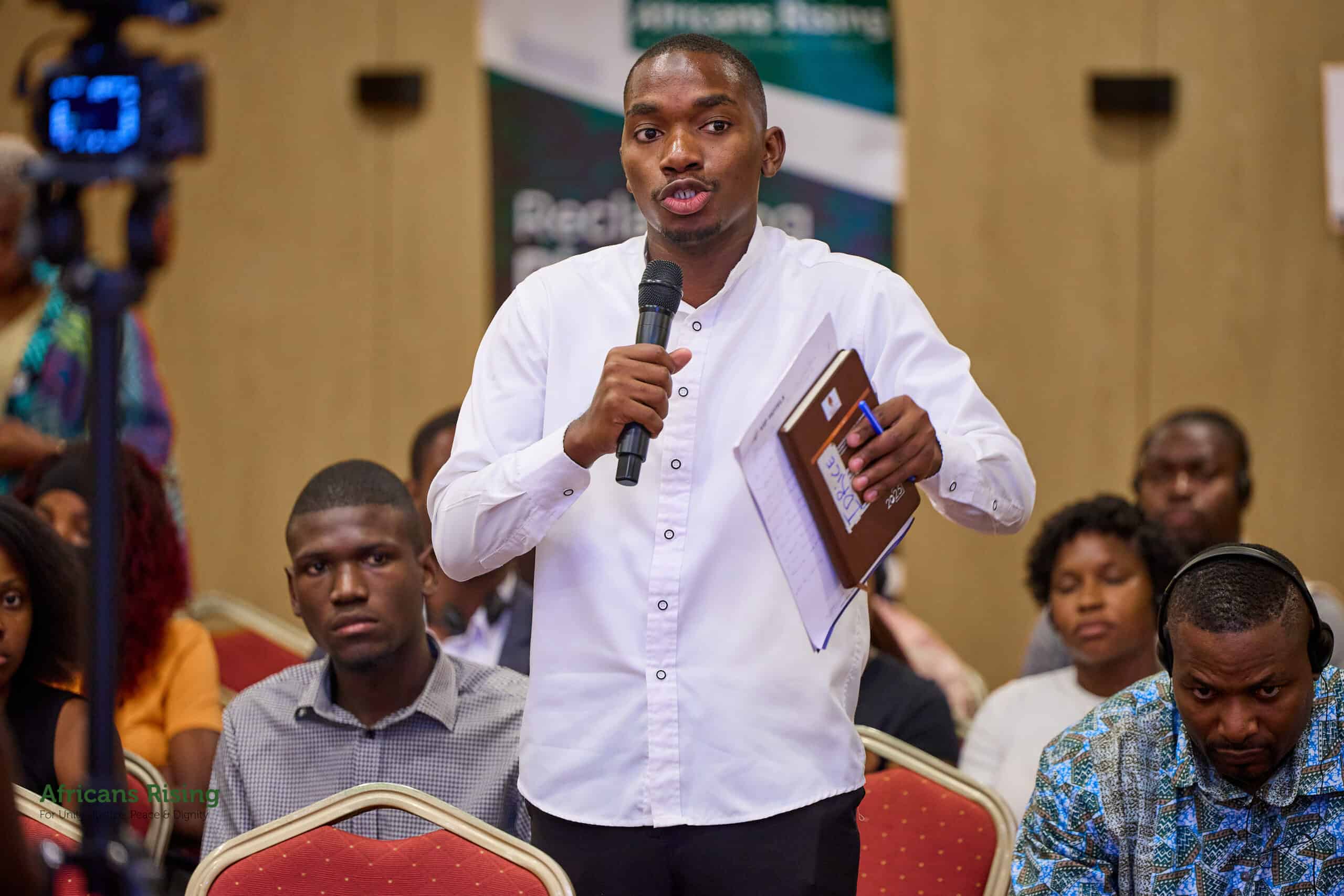
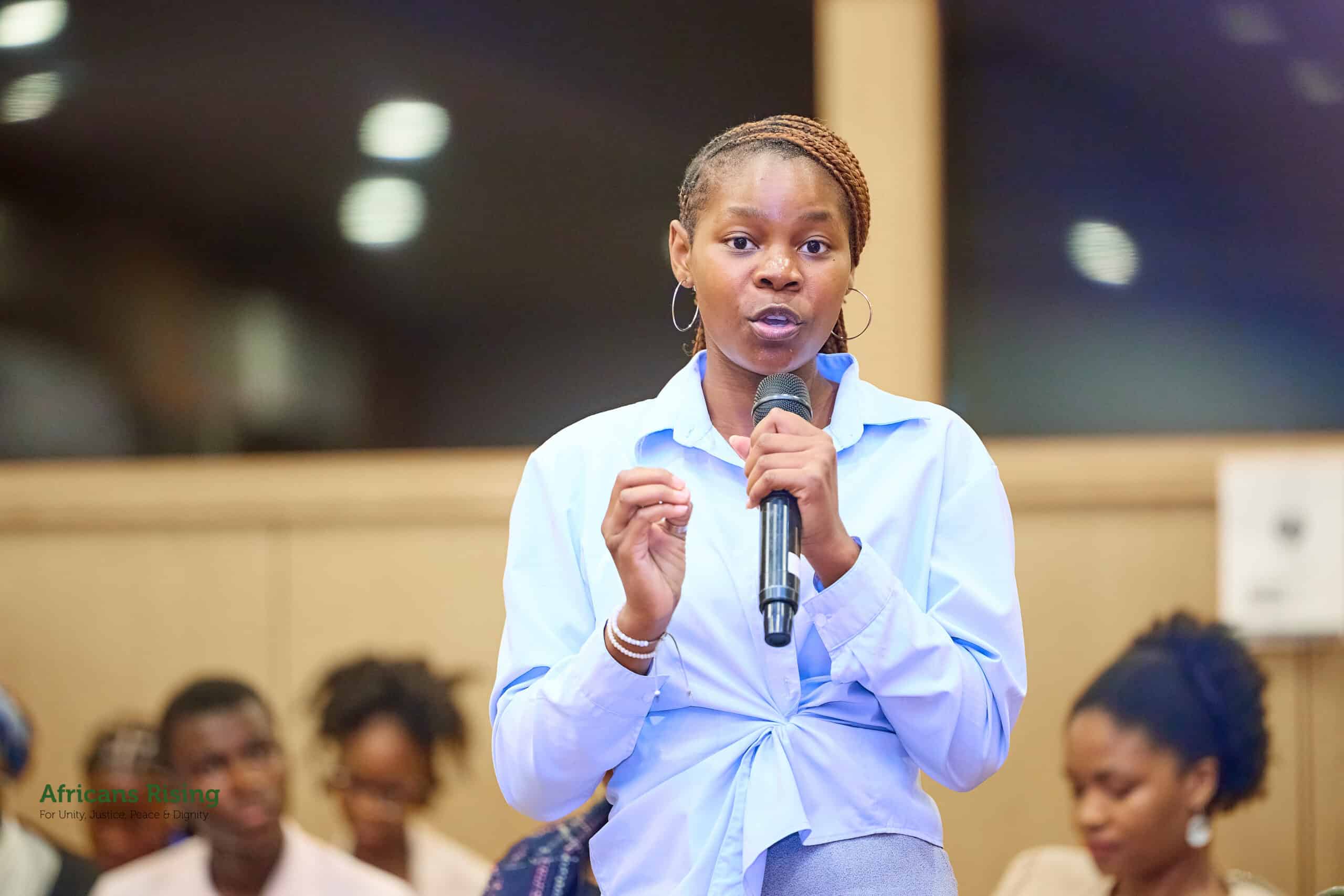
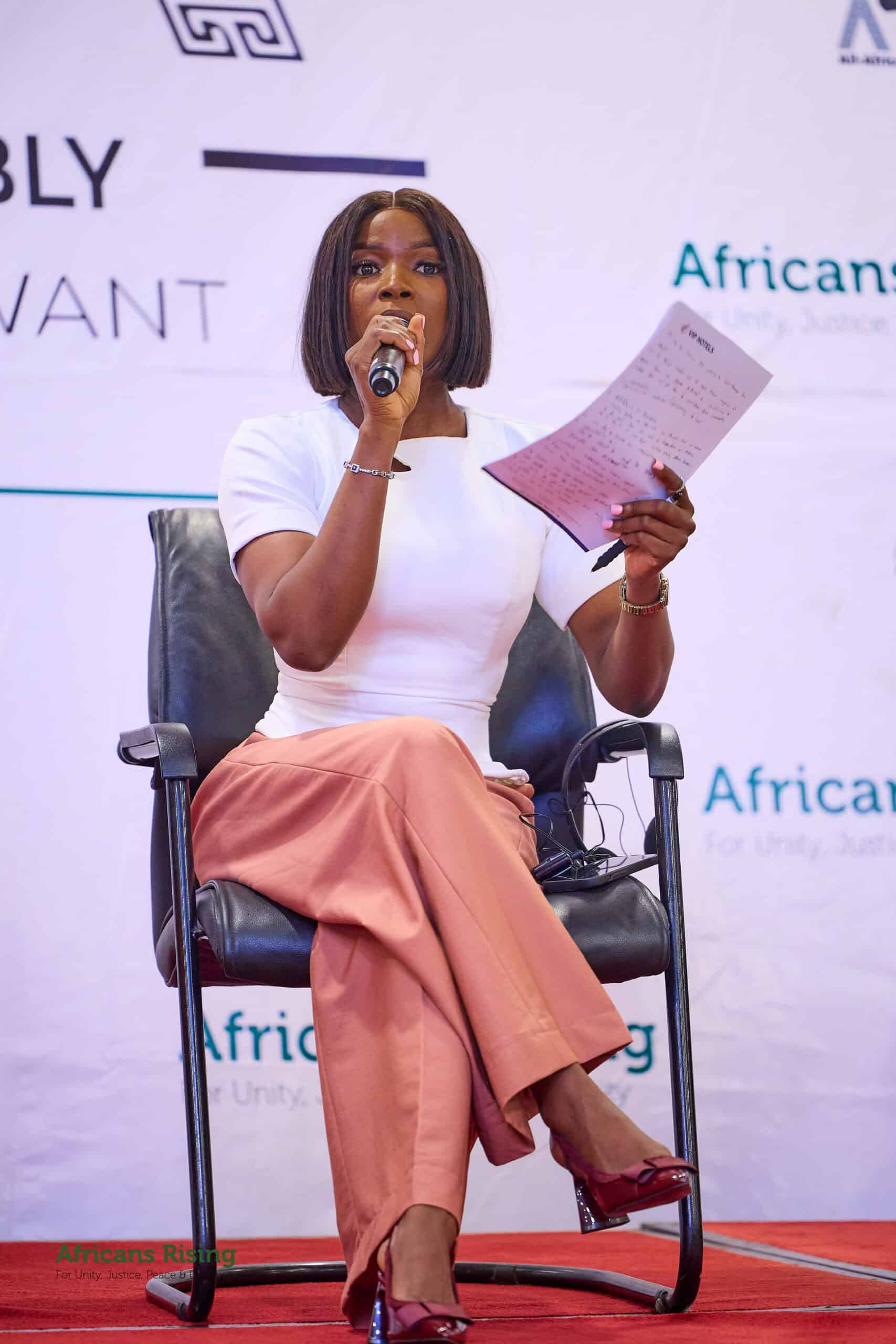
Following this, Yakubu moderated a high-stakes plenary panel on “The Future We Want” alongside members of the Coordinating Collective. He urged delegates to put on their “imaginative caps” to construct political alternatives to our oppression. The grassroots floor responded with sharp, uncompromising interventions:
- “How can we ever claim true independence if our movements continue to beg for financial assistance from the outside?”
- “Our generation must break out of the cages of apathy and stand up boldly for a unified, pan-African continent.”
- “We must constantly interrogate: who is the Africa we want being built for, and whose interests does it serve?”
The afternoon transitioned into four dynamic, simultaneous breakout tracks exploring ethical governance, economic justice, climate justice, and feminist futures in a united Africa. Amid these sessions, the assembly rose in fierce, spontaneous solidarity to condemn the political targeting of Tanzanian opposition leader Tundu Lissu, who faces trumped-up treason charges and a potential death penalty. Members demanded his immediate freedom, embodying the borderless principle that an injury to one is an injury to all.
The historic first day concluded with a collective wellness and solidarity walk to the heart of Mozambique, the Independence Square, to visit the iconic statue of Samora Machel, the revolutionary leader who won Mozambique’s independence. Standing at 5 meters tall and weighing 1,263 kilograms of copper and bronze, the monument reflects a powerful pan-African symbolism. It intentionally leaves Machel’s attire uncolored, asserting his identity purely as an African and a Mozambican. With his right hand raised and his index finger pointing firmly toward the Central Bank of Mozambique, the statue serves as a permanent revolutionary reminder that true liberation is incomplete without economic sovereignty. Fifty-one years after Mozambique’s independence, and forty-five years since the statue was conceptualized, his finger still points our movements toward the ultimate target: reclaiming the wealth of our people.