
Opinion: AU Heads of State Must Prioritize the Free Movement Protocol Now! In the 39th ORDINARY SESSION OF THE AU ASSEMBLY.
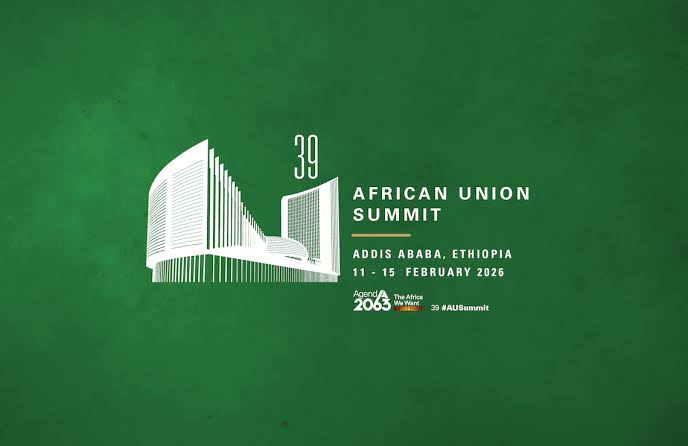
This week, African Heads of State are gathering in Addis Ababa for the 39th Ordinary Session of the African Union Assembly to deliberate on the future of our continent. There will be powerful speeches, beautiful side events, and the usual diplomatic energy that comes with such a summit.
But beyond the pomp and color, they should prioritize the ratification of the Free Movement Protocol.
The future of Africa cannot be fully realized if we remain divided by borders that make it difficult for Africans to move, trade, connect, and dream together. Open borders are not just about economics. They are about dignity. They are about integration. They are about making it easier for an African to feel at home anywhere in Africa.
I often think about the words of former AU Chairperson Nkosazana Dlamini-Zuma when she spoke about “Borderless Africa” and the role of freedom of movement for cross-border women traders. She was right. We cannot talk about a borderless Africa without talking about women.
Across our border towns, women are some of the most active economic players. Yet they remain stuck at the lower ends of value chains. They face sexual harassment, restricted market access, complicated customs processes, and unnecessary movement barriers. These are women feeding families and sustaining local economies. A truly implemented Free Movement Protocol would not just ease travel; it would restore dignity and opportunity to thousands of women who already power Africa’s informal trade networks.
We have already seen what political will can do through the African Continental Free Trade Area (Afcfta). As a sister instrument to the Free Movement Protocol, AfCFTA has made visible progress including protocols focused on women, youth, and digital trade. There has been movement. There has been coordination. There has been ambition. So why should free movement lag behind?
And what would this mean for Africa’s youth?
The so-called “youth bulge” is often described as a crisis. But I see possibility. African youth are creative, resilient, and entrepreneurial. The creative economy alone contributes immensely to our economies. A borderless Africa would unlock opportunities not just for trade and education, but for collaboration, storytelling, and cultural exchange. It would allow young Africans to explore the continent, showcase our creativity, and reclaim our narrative on our own terms.
Recently, when a Gen Z content creator ispeed show ( Daren jasson Watkins ) streamed from different African countries, many of us experienced parts of the continent we had never seen before. I still get excited thinking about how beautiful Benin looked. For a moment, colonial narratives dissolved. We saw Africa through fresh eyes connected, vibrant, and united.
Now imagine if that digital connection was matched with physical freedom of movement.
Imagine not having to buy Nigerian batik in Nairobi at skyrocketing prices because you could simply travel and buy it yourself in Nigeria. Imagine my friend Maria in Zambia not paying so much for Kenyan tea because movement and logistics were simpler. These may sound like small examples, but they reflect something bigger: how borders quietly inflate costs, limit exchange, and keep Africans apart.
At this 39th AU Summit, Heads of State must seize the opportunity. Ratifying the Free Movement Protocol would move us closer to the aspirations of Agenda 2063 the Africa we say we want.
We cannot lose momentum.
A borderless Africa is not just a policy ambition. It is a promise we owe ourselves. It is economic sense. It is gender justice. It is youth empowerment. It is cultural confidence. In many ways,
The head of states in the summit must cease this opportunity in the 39th African union summit to make Africa borderless by pushing for the ratification of the protols. This will equally fulfil the dreams and aspiration of agenda 2063! We cannot lose the momentum because borderless Africa is the reparations that we owe to ourselves. it is the continuation of our liberation.
The Author, Anne Rose Osamba, is a pan African feminist and the lead advocasy and campaigns at Africans Rising.